

Freedom smells like petrol
Growing up a petrolhead; on elbowing my way into the boys’ club and proving that grease doesn’t care who wears it.

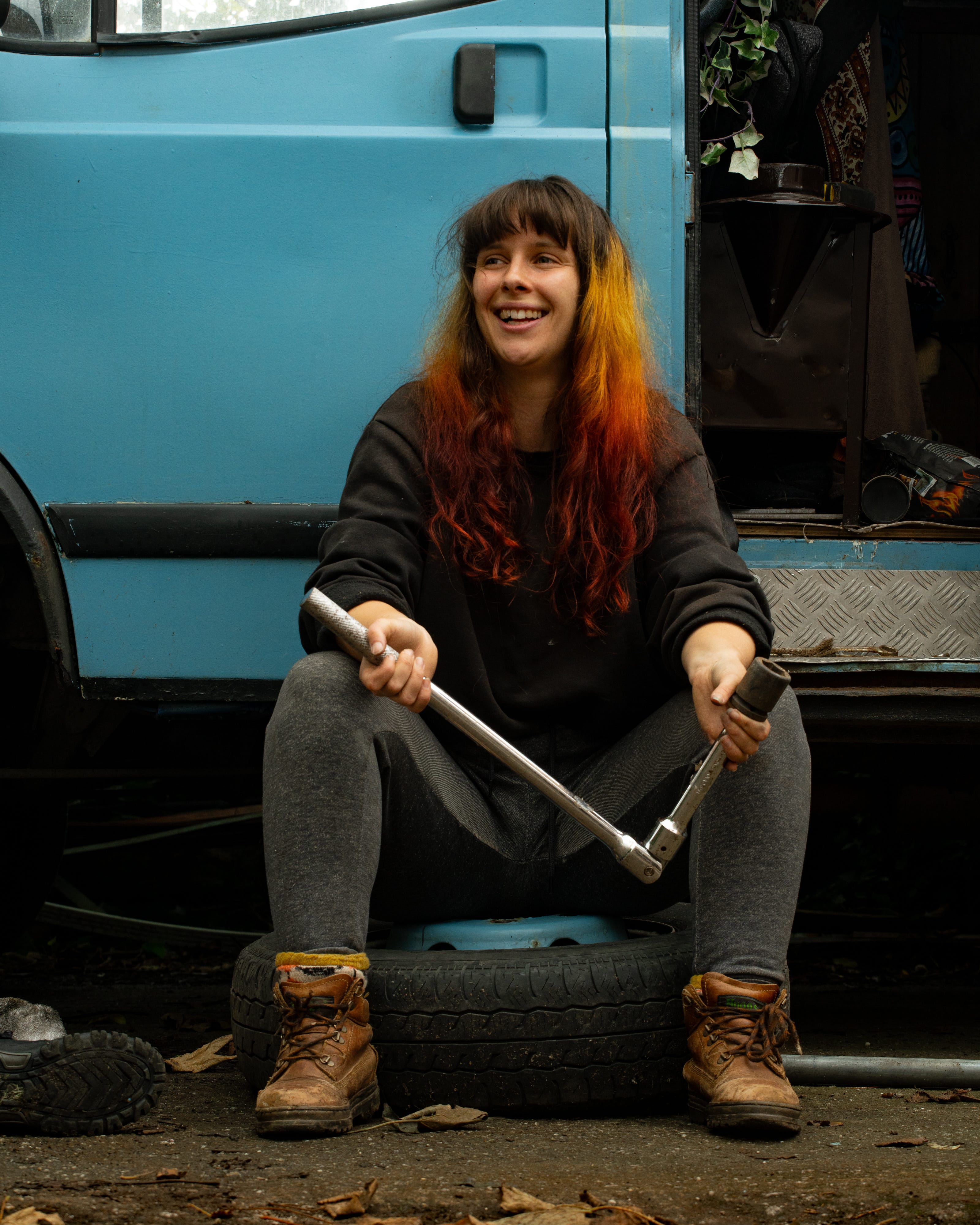
Before I learned to drive, I learned to love the smell of petrol. At ten years old, my best friend and I would lift the lids of our quad bike tanks just to inhale it— the scent of freedom. We didn’t know then that freedom often comes with breakdowns and bodge fixes.
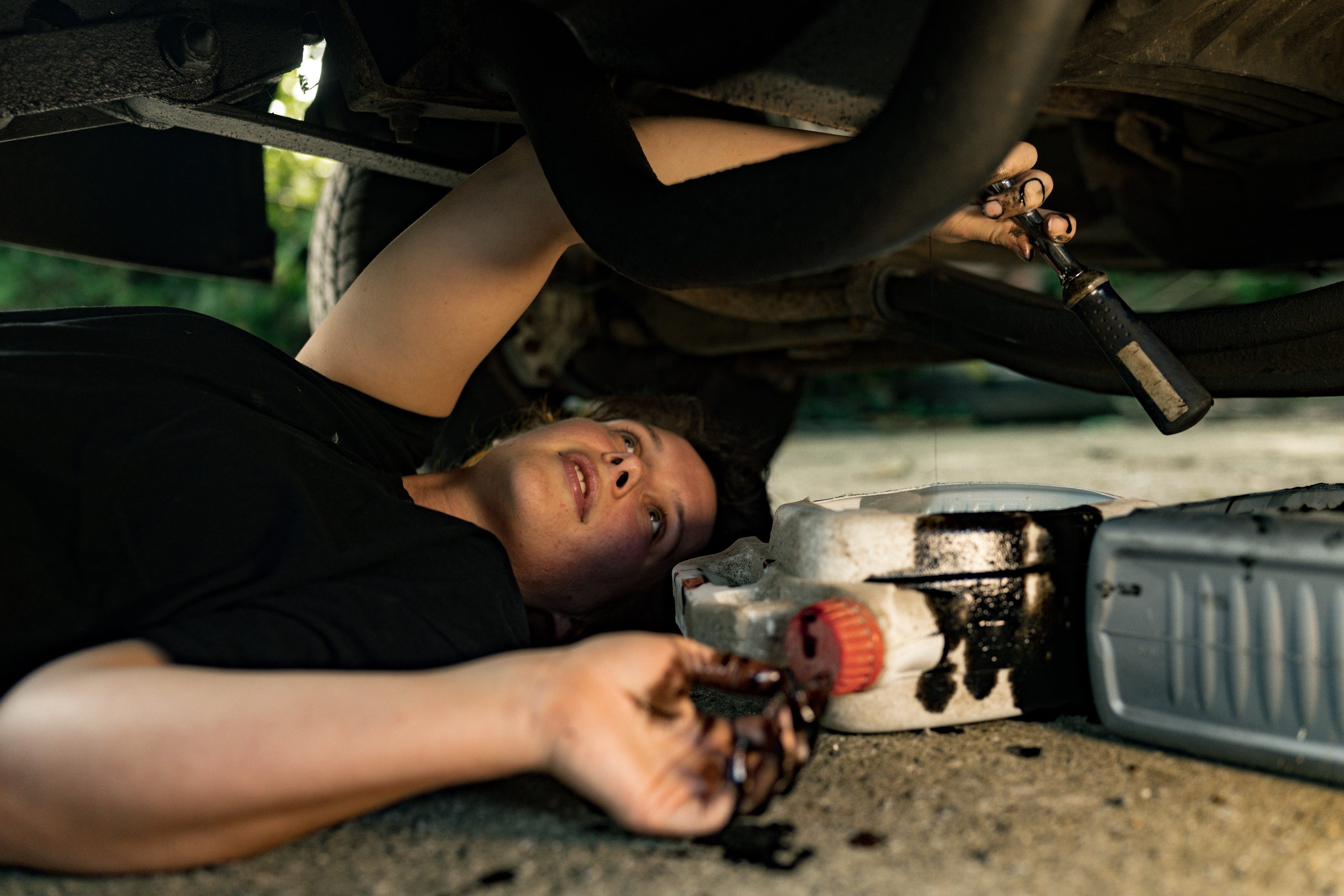
I grew up watching Top Gear; I distinctly remember when I was 9 them dropping a Toyota Hilux off a building and bringing it back to life using only basic spanners and WD40. I noticed later on on rewatching the episode that an LDV Convoy sat unobtrusively in the foreground– an ominous bit of foreshadowing, perhaps?
Growing up with a single dad only fostered my love of vehicles, although I wouldn’t get into their repair and maintenance until much later on. Not long after we moved to France, my dad bought me my first quad bike, then a dune buggy and a motorbike.
I learned to ride the quad first, quickly learning to do doughnuts on the snow and make 3ft high jumps in the air. I would beg my dad to take me for rides in the dune buggy until one day he said lazily, “you drive it”. A lot of my lessons I learned were admittedly from parental negligence, but it taught me to be independent and I picked skills up quickly, whipping the steering wheel round and the handbrake up like I’d been driving all my life.
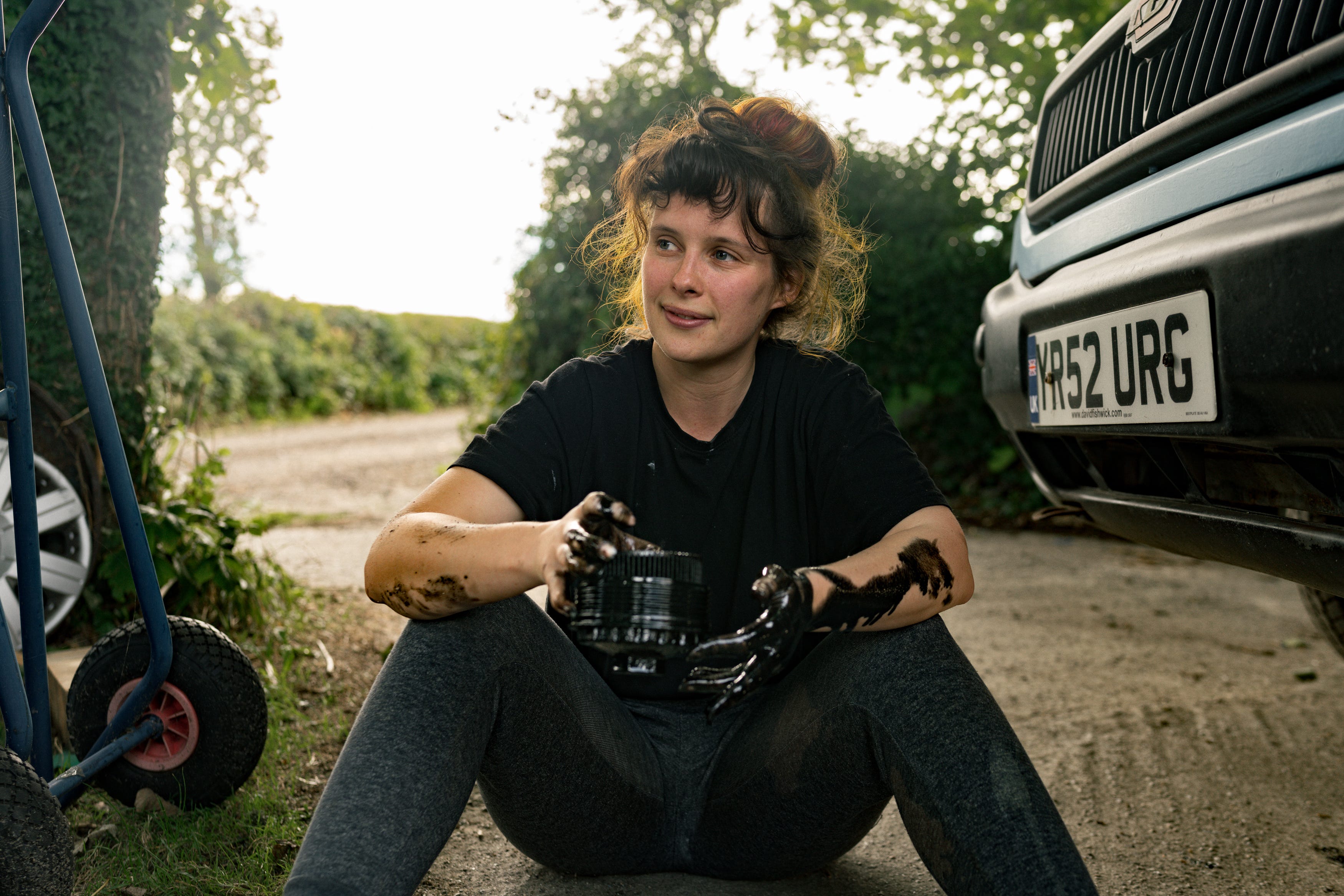
My favourite vessel was by far the quad. The hours trawling the countryside off-road on muddy chasse (hunting) trails, chugging across fields and fording rivers were the postcards of my childhood. I believed then that I would always have this kind of freedom.
At that point it never occurred to me that this was the kind of thing little boys did, or how someone would react if they saw two ten year old girls riding quad bikes alone and unsupervised in the forest. Although we did get quite a reaction from our church-going neighbours when I came hurtling towards them behind the wheel once; I was told to stick to the garden after that.
Mid-adventure my friend and I would stop to unscrew the lids on our petrol tanks and smell the fumes: we were proper petrol heads. She would go on to drive gigantic trucks and tractors in the Outback.
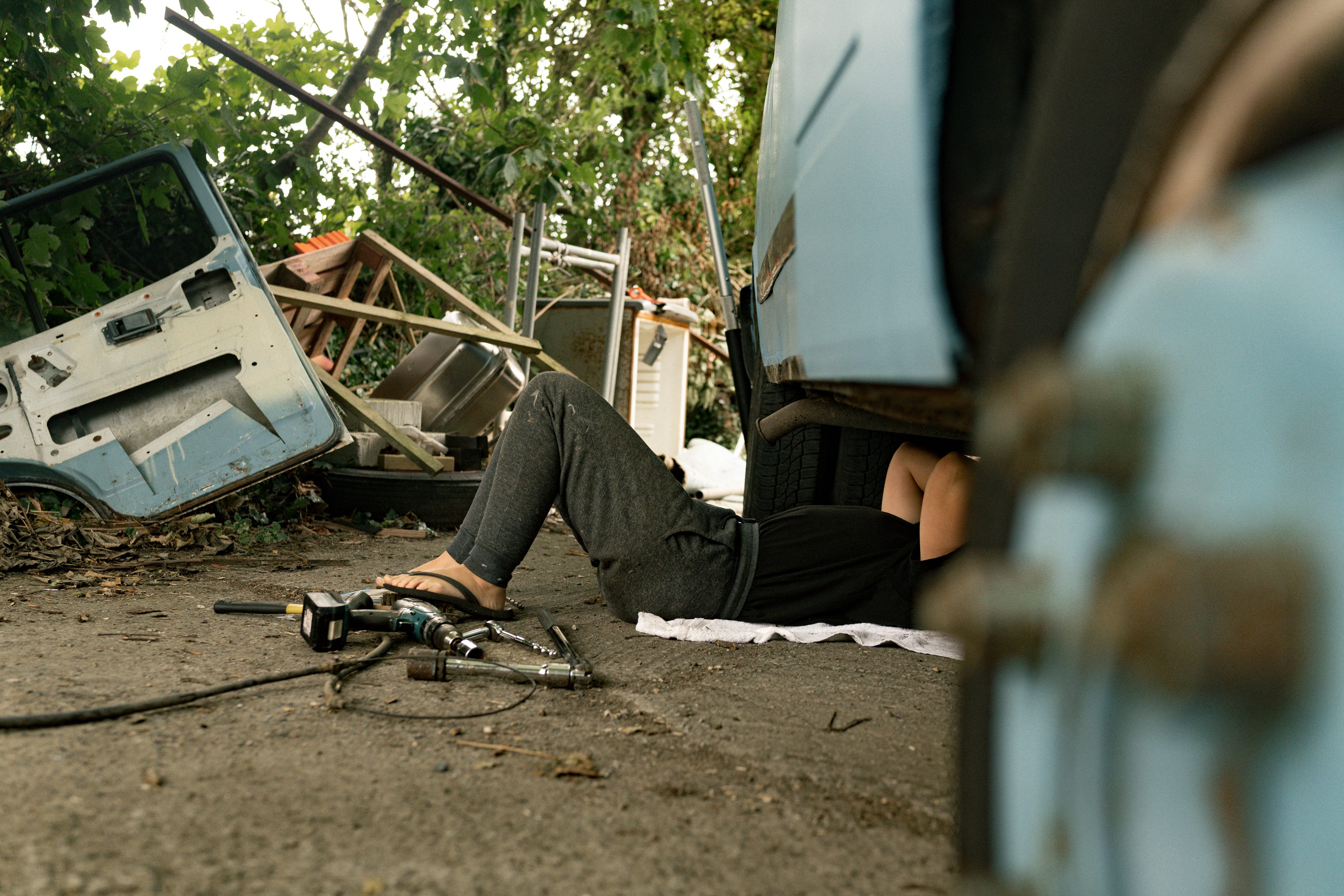
I got my driving license when I was 18; I passed first time, and earned my ticket to freedom. I cherish and value it more than many things I own, knowing how stranded I would be without it. Living my teenage years in a little Cornish village without a proper bus route meant that driving was a lifeline. I got my first car before my license, and you can bet I was already driving it around by then.
Even in my early years of legal driving I’d take my 25 year old car down stupidly flooded muddy tracks and bumpy coastal paths just to see what it could do. I’ve since done things that would make my driving instructor balk.
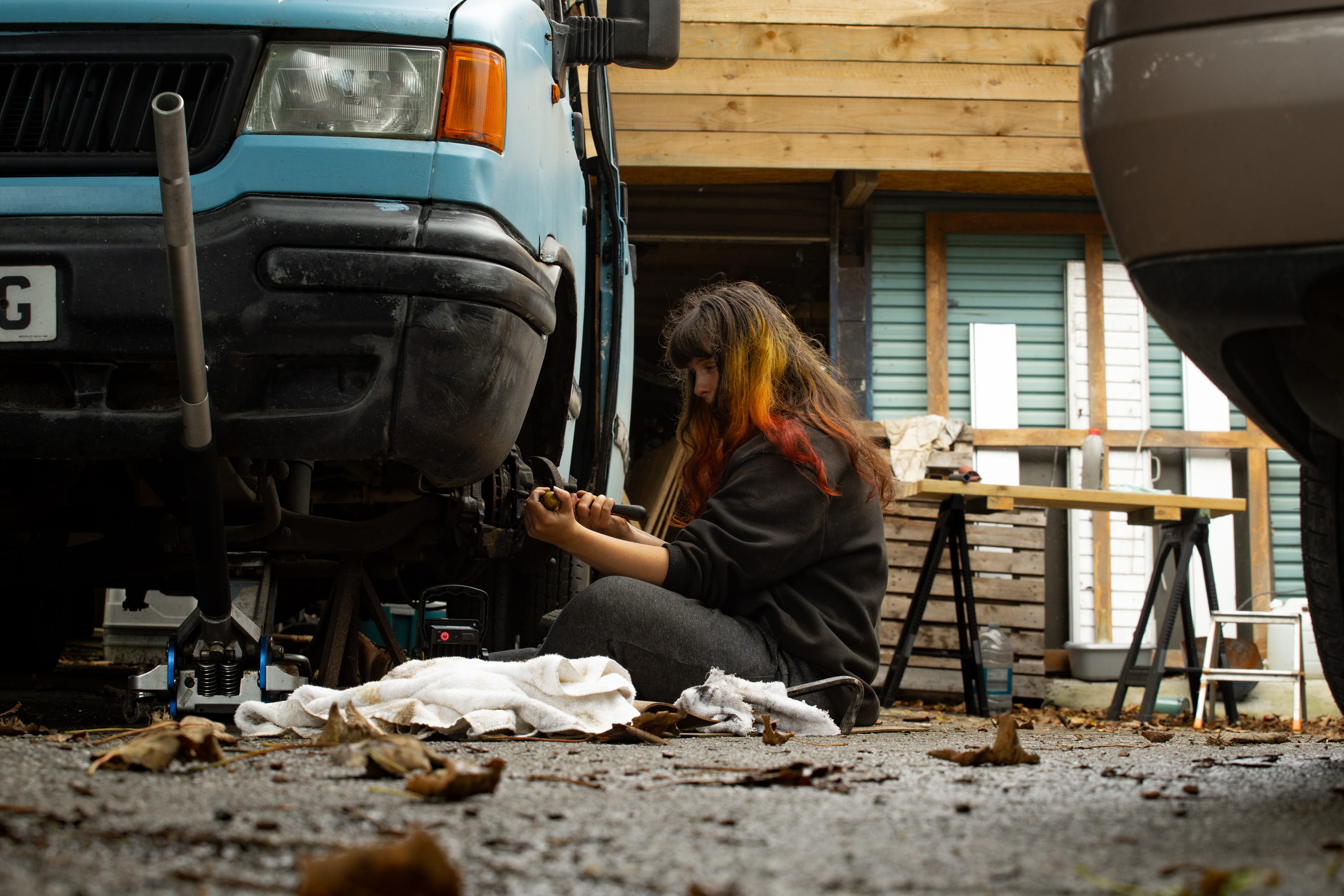
It was this relic of a car that taught me my first mechanical lessons, but it was Ben who would ignite my shared love affair with British vehicles. Poorly-built, obsolete, made of things pulled out of a parts bin and rusty from the day they left the factory– completely unloveable.
They had neither the reliability of the Toyota nor the build quality of a Volkswagen-Audi nor the prestige of a Mercedes, but they had one thing: the unfounded pride of the British people. And style, lots of style (except in the LDV’s case, which looks as though the boss took his 5 year old’s drawing of a van and used it as a blueprint).
Yes they’re quirky, they take on a mind of their own, no they’re not reliable and will spend more time broken down or sitting in a scrapyard than driving– but I loved them. Because where was the fun in driving something you knew would make it from A-B?
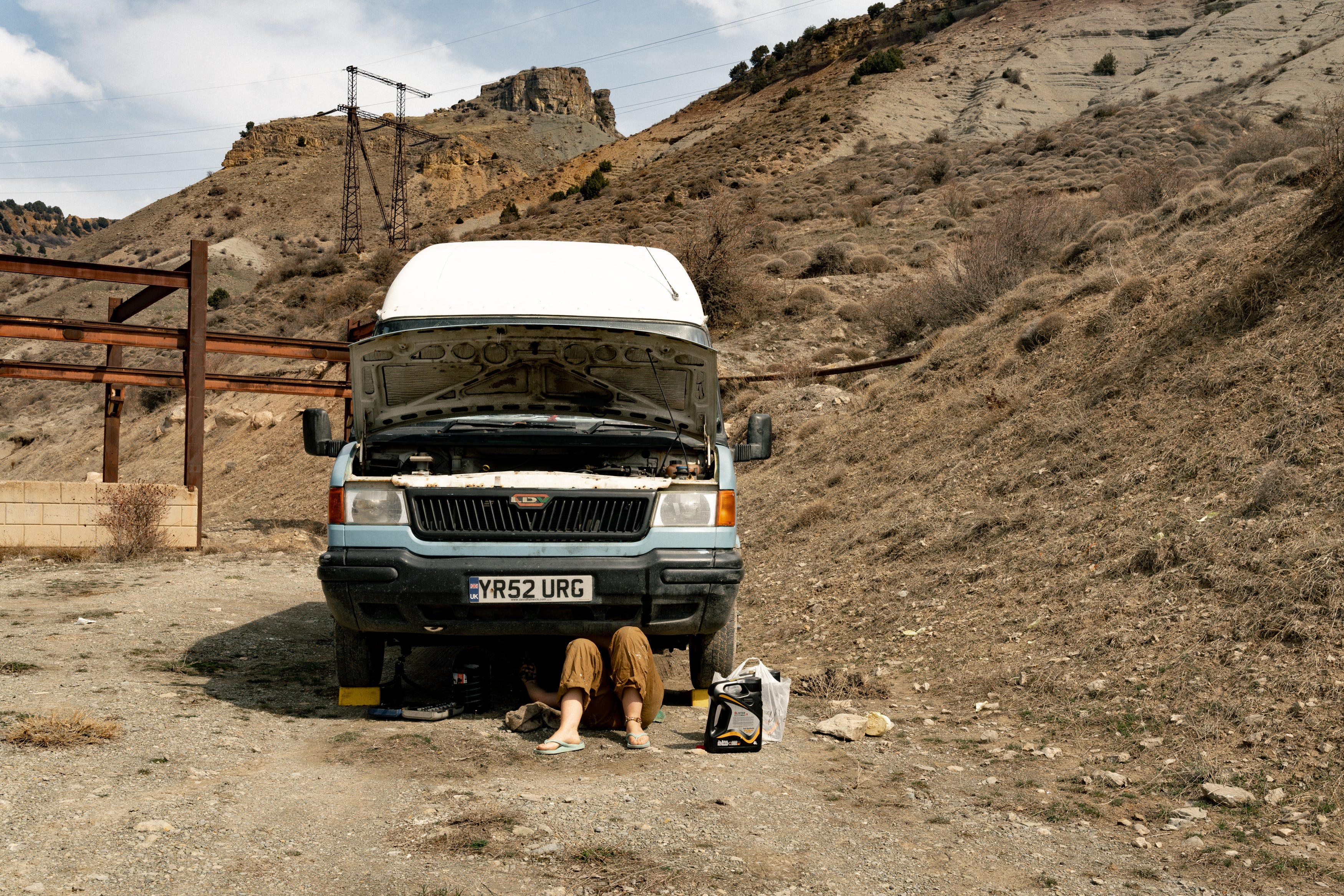
This love has led me to become not just a mechanic, but a dabbler. There’s something strangely thrilling about pushing a machine to its limits, driving out into the middle of nowhere knowing you’ll be relying on your own mechanical skills and basic tools if you break down. If you’ve ever had to coax something back to life with tape and optimism, you’ll know the satisfaction I mean.
I’ve felt no greater triumph than diagnosing a fault and fixing it with duct tape and a plastic bottle in the rain. Old vehicles have a way of making their problems your problems, but there’s a strange loyalty that forms between you— a pact sealed in grease, swearing and cable ties.
We live in a world where the default is to replace, not repair. I’ve always taken great delight in defying that mindset.


My proudest moment? Alone in Türkiye, when the van broke down in an impossible spot where it could not be towed. I knew from weeks of struggling with a spanner under the bonnet that air was getting into the fuel. The culprit: a cracked fuel filter. I’d managed to instruct a mechanic to bring the right part, though he eyed me doubtfully when he arrived.
In patriarchal cultures such as Türkiye’s, where male mechanics are concerned, I usually resort to using Ben as my mouthpiece to be heard. Yet here I was, alone.
The mechanic swapped the filter, tried to start the van. Nothing. I told him the injector needed cracking while I cranked. He ignored me once, then finally listened. The van roared to life.
He eyed me with a mixture of curiosity and appreciation, wondering what sort of strange female creature I was, and then offered me the ultimate sign of respect:
“Cigarette?”
We stood there by the sea, smoking and admiring our work.
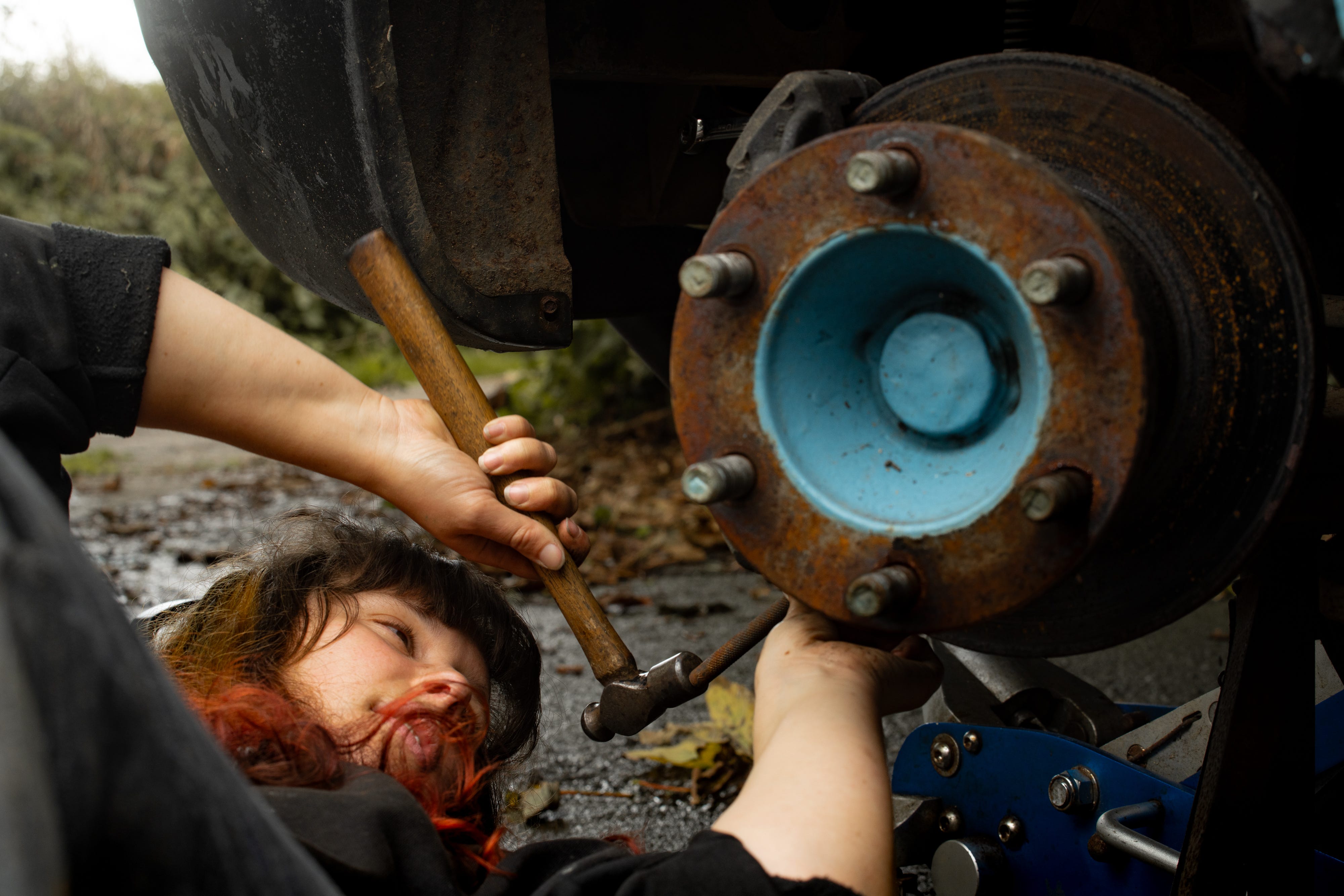
Being a woman in this world still raises eyebrows. People assume I’m the passenger, not the one who diagnoses the faults or changes the oil. But I’ve grown into this space not to prove anything— simply because I love it. Because I want to understand the machines that carry me, and earn every mile they give me. And I’ve come to love the oily, tangled reality under the bonnet, the language of torque specs and fuel lines.
You see, these vehicles— the ones with quirks, with histories— they’ve taught me lessons like patience and perseverance. I know the warning signs now before they appear on the dash. I can tell from the sound of the starter or a twitch in the throttle when something’s not right. These machines have taught me to improvise, to laugh when stranded, and to find joy in the fix.
The smell of petrol has always meant freedom to me. It reminds me that forward motion is always possible, even when it feels like you’re stuck. Not everyone falls in love with rust and repair manuals, but most of us, at some point, will have to learn how to keep something going— a dream, a relationship, a home— with fewer tools than we’d like. We’ll need to improvise. Patch things together. Get our hands dirty. And maybe, if we’re lucky, we’ll find joy in the bodge fix too.
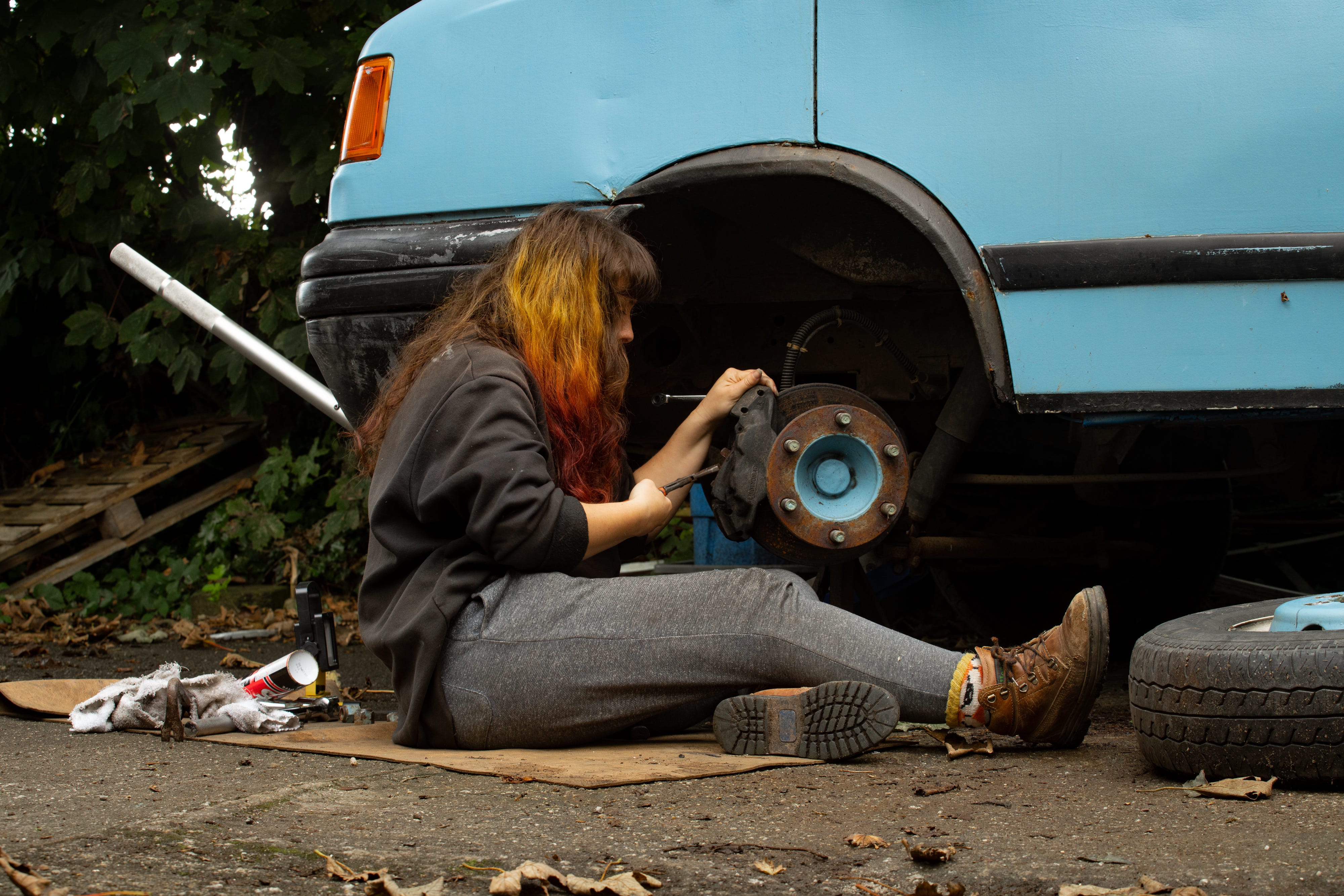
If this story resonated with you— whether you’ve ever had grease under your nails, fought your way into a space you weren’t expected to be in, or just love the smell of petrol as much as I do— I’d love to hear your thoughts. Leave a comment, share it with a friend who’ll get it, and if you’d like more stories from the road (and the garage), hit subscribe so you don’t miss the next one.
–Lucy 💙
I always suspected you're a badass. This confirms it. Lovely written! Greetings from Germany.
A brilliant story as always Lucy, and cracking photos! I too grew up with my hands covered in oil, and there's nothing I enjoy more than fixing the equipment I use to explore the world. The bond you develop with anything you bring back to life simply can't be bought. Keep up the great work, you inspired me to go out and fix my bike :)