

The wayside diaries week 9: Hraungambri moss 🌋
The last winter miles— a becoming written in lava, wind, and moss. The Wayside Diaries' final chapter.

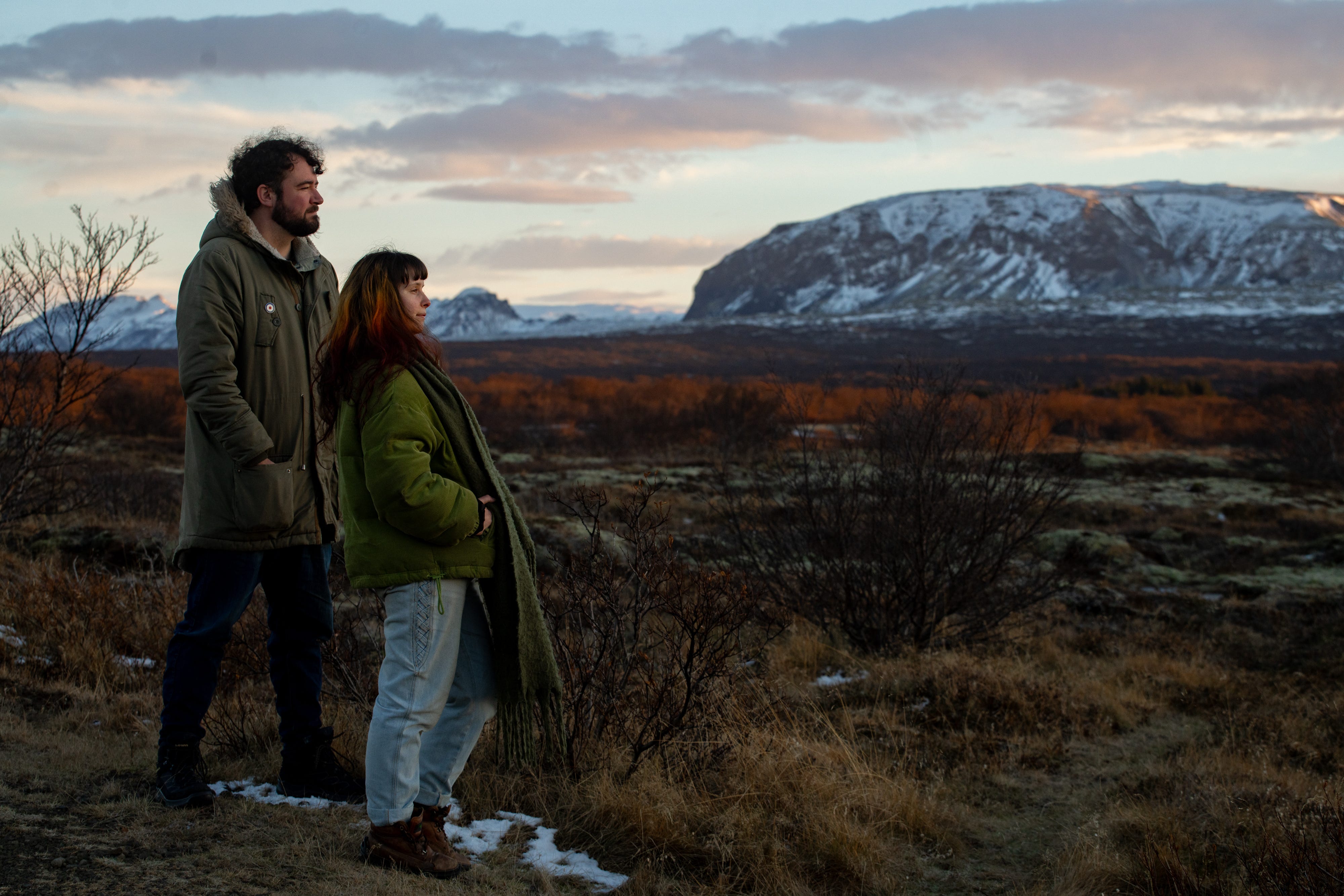
We advanced along the open plain little by little as the wind shoved us back again and again. The mountains offered no shelter; instead they forced the wind through their valleys, whipping it into a murderous frenzy that tried to force us off the road and caused the engine to cut out.
I begged the others to turn around as the wind shook me, but I saw the indifference in their eyes, and they saw the terror in mine. My breathing stalled; tears rolled. I started to unravel.
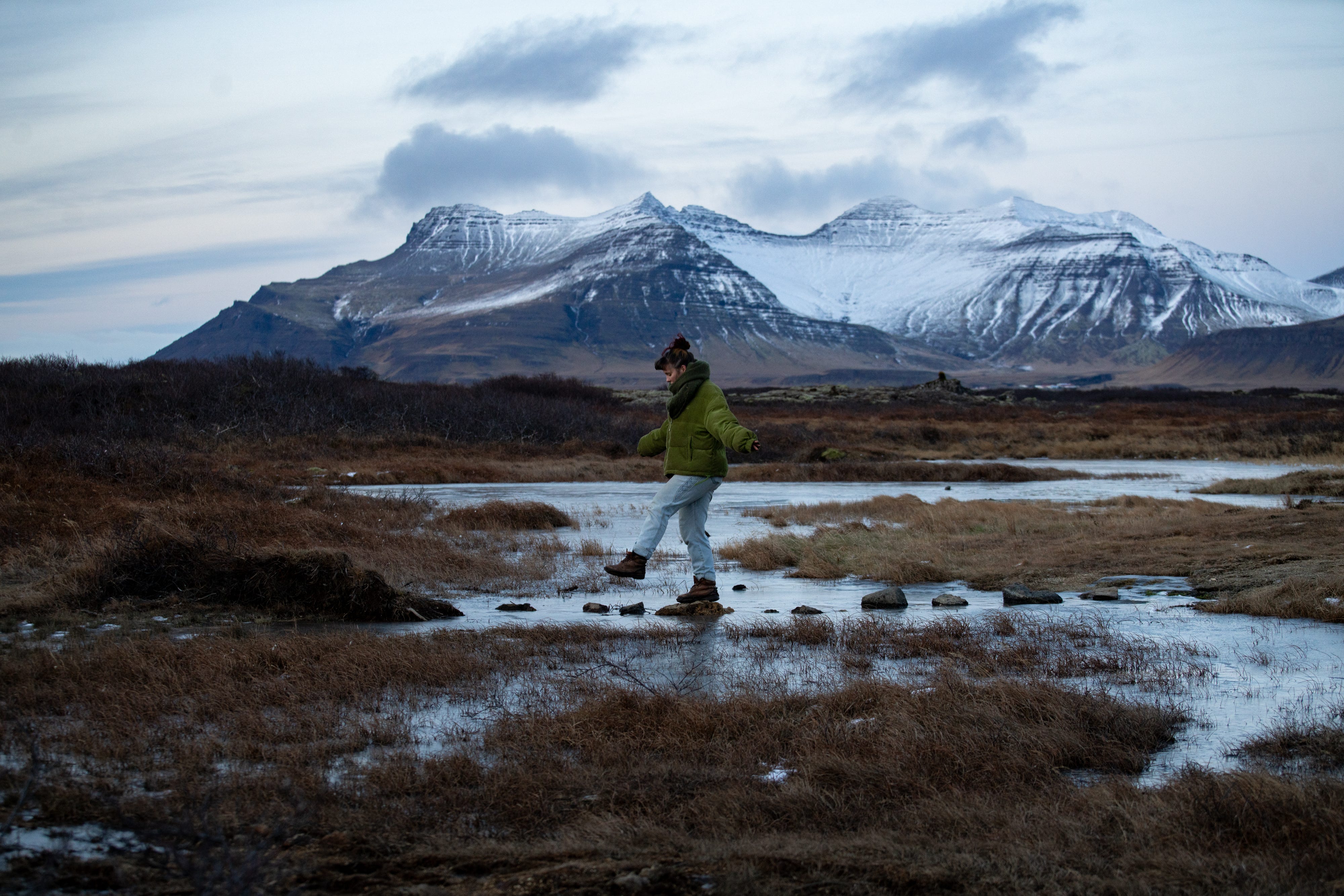
We’d followed Þjóðvegur 1 (Route 1) religiously around the whole island, moving anti-clockwise, diverting at the Westfjords and rejoining later on. Our tarmac guide morphed from ice roads to gravel tracks into a dual carriageway around the city, our constant companion showing us the way. It gave incredible views in exchange for safety, though it was always mercifully easier and more reliable than the side roads.
As we toured the capital of Reykjavik the roads were geothermally heated and free of ice, but the wind had other plans. Wind in Iceland is not like wind elsewhere; it hits you like a freight train, from sideways, from behind, from underneath. It takes on a personality of its own; vengeful, swelling with bitterness. It forced us to stop driving, forced us into an endless stream of sterile hotels. And my mood plummeted.
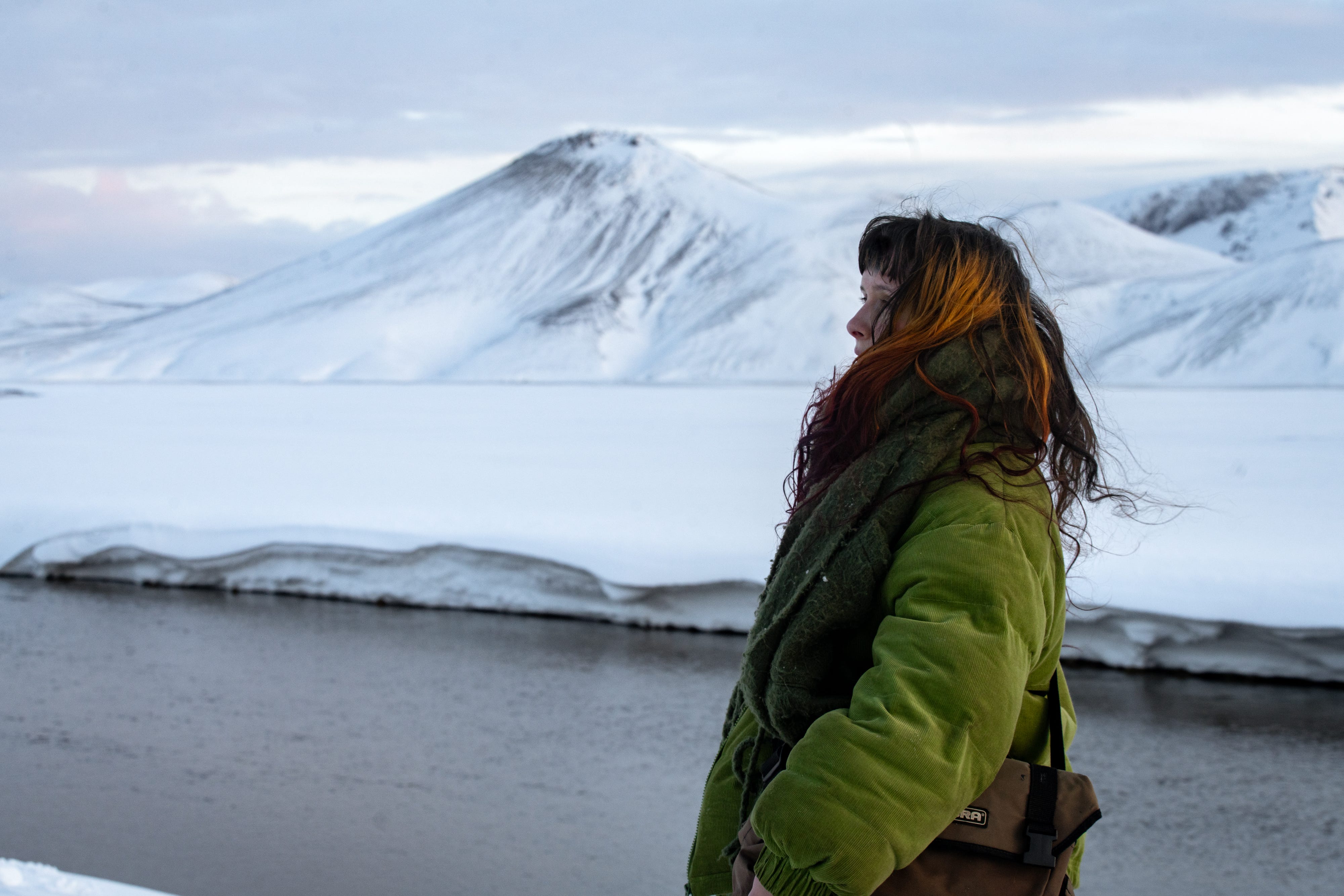
Just a few days ago I’d re-found myself in the golden grasses, aurora skies and glassy waters of the Westfjords; now I was trapped in an unfamiliar urban environment, and despite it being one of the smallest capitals in Europe, it felt suffocating.
I was no longer myself; I was sullen, angry, lashing out at those around me, and guilty for doing so. Even heading west of the city, I was still confined to the Golden Circle, Iceland’s tourist trail where I felt penned in at every turn.
It’s funny how something that feels like failure can also feel like salvation. The string of guesthouses we stayed in were warm, comfortable; they had thermal water on tap, didn’t rock in the wind, and the beds were always level. However I wasn’t ready for comfort; northern Iceland had shown me the aliveness of survival and wonder sparkling in its crystals of ice. And my van had provided the thinnest of shields between me and the elements. I cried into my warm pillow all night, grieving what I’d so briefly found and lost.
Before we came to Iceland a friend told us that the locals aren’t interested in the free natural hot springs. We, as sulphur addicts, couldn’t understand why when they were so beautiful. But now we were here, I understood. Their homes are heated and powered with thermal water. Thermal water flows from their taps and showers. It allows them to bake bread underground. Thermal pools acted as historic places of community and conflict resolution. They still act as social hubs for people of all ages, teenagers, tired farmers. As I write, swimming pool culture has just been added to the UNESCO Intangible Cultural Heritage List.
But despite having thermal water literally on tap, I was desperate to escape the guesthouses and be somewhere wild. I craved hardship over comfort, however inexplicably. There was no way to escape my slump without the tonic of nature.
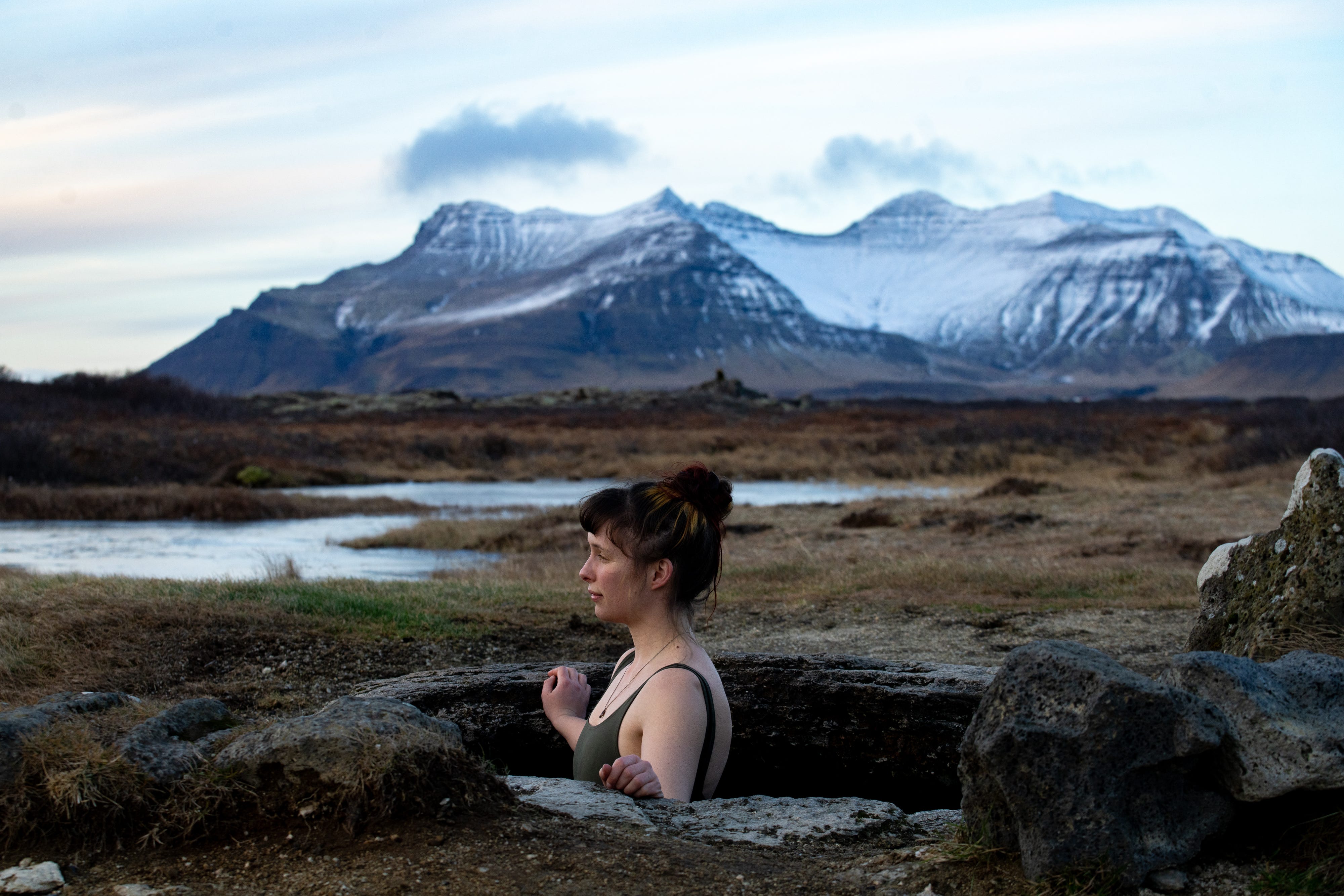
The next morning it was -8ºC and falling. It was 7am, and the 4 hours of December daylight wouldn’t begin until 11. A pair of headlights pierced the darkness and rounded a corner, pulling up next to us; our ride.
In winter, the only vehicles capable (and permitted) of driving into the Highlands are Iceland’s Super Trucks. Thrice the size of regular 4x4s with wheels taller than my standing height and enough auxiliary lights to make the sun seem dim, these beasts could tackle virtually any track or climate. And one had been rented for us for the day.
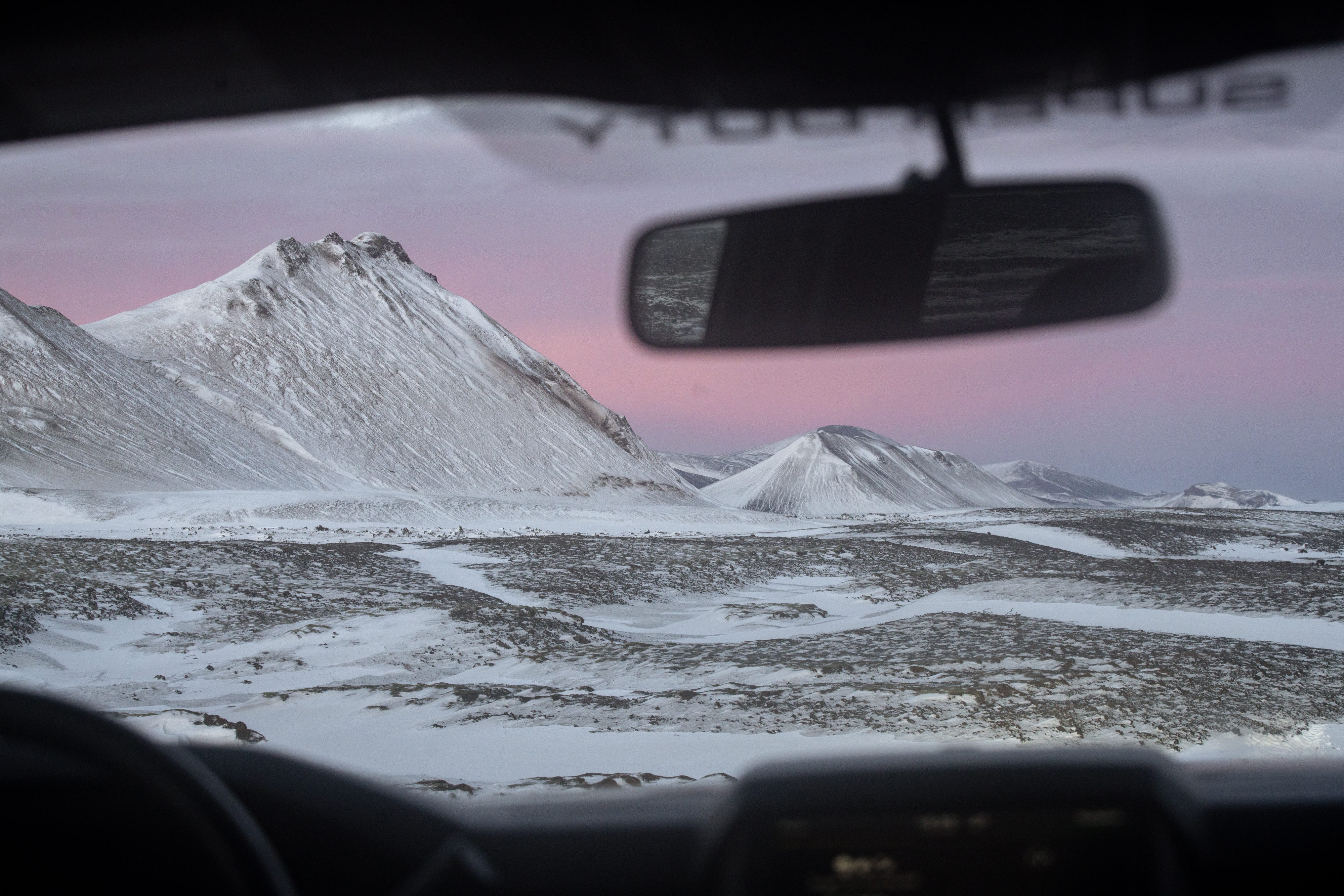
We drove way into the mountains, peppering the driver with questions, before eventually turning off onto an F-road, Iceland’s network of off-road roads unsuitable for 2WD vehicles.
Almost immediately he was driving over snowdrifts the size of speed bumps, sheet ice, and the thought of civilisation was a whisper on the snow. The permanent population of the Highlands is zero. Not one soul lives there year-round. A vast, uninhabited area of glaciers, volcanoes and tundra, it’s often cited as one of Europe’s last true wildernesses.
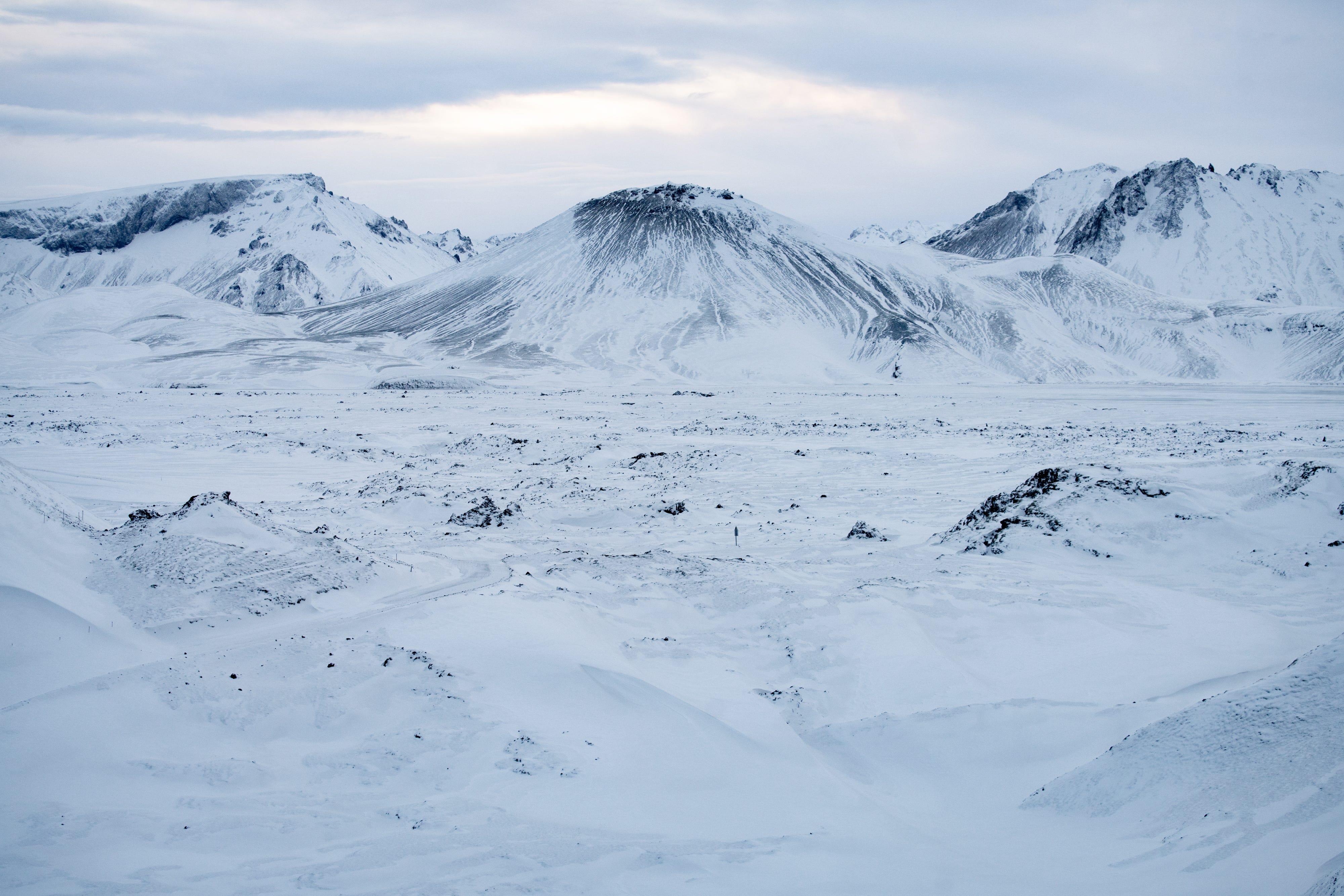
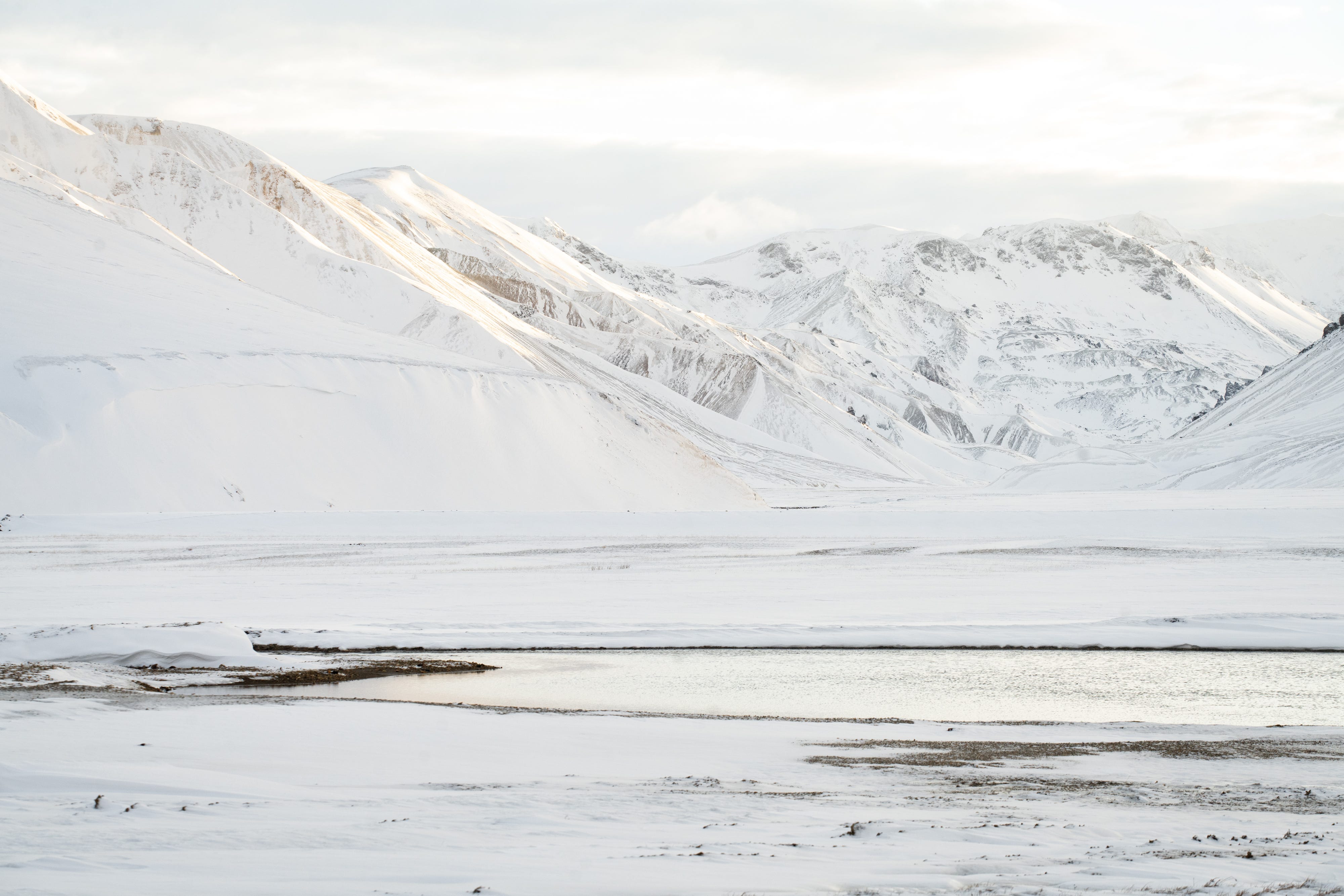
And we were cutting our way through it on a tiny streak of grey that regularly disappeared under blankets of white. Some drifts were too big to pass, and we diverted around them on the spines of lava fields. One blocked our route entirely.
It took our guide over an hour of shovelling to pass a 60m long drift that had slid off the mountain and onto the track. We watched from the sidelines, unable to help, gazing out at layer upon layer of white. At first glance the palette was lifeless; monotone. But peering out at the expanse before me my eyes started to pick out the outlines of craters and lava rocks, hinting at what lay below, and the opaque surface of a frozen lake. I even saw an arctic fox, black as basalt, sprinting up a hillside. It was the kind of place that seemed to hold its breath all winter, soul-jarringly still.
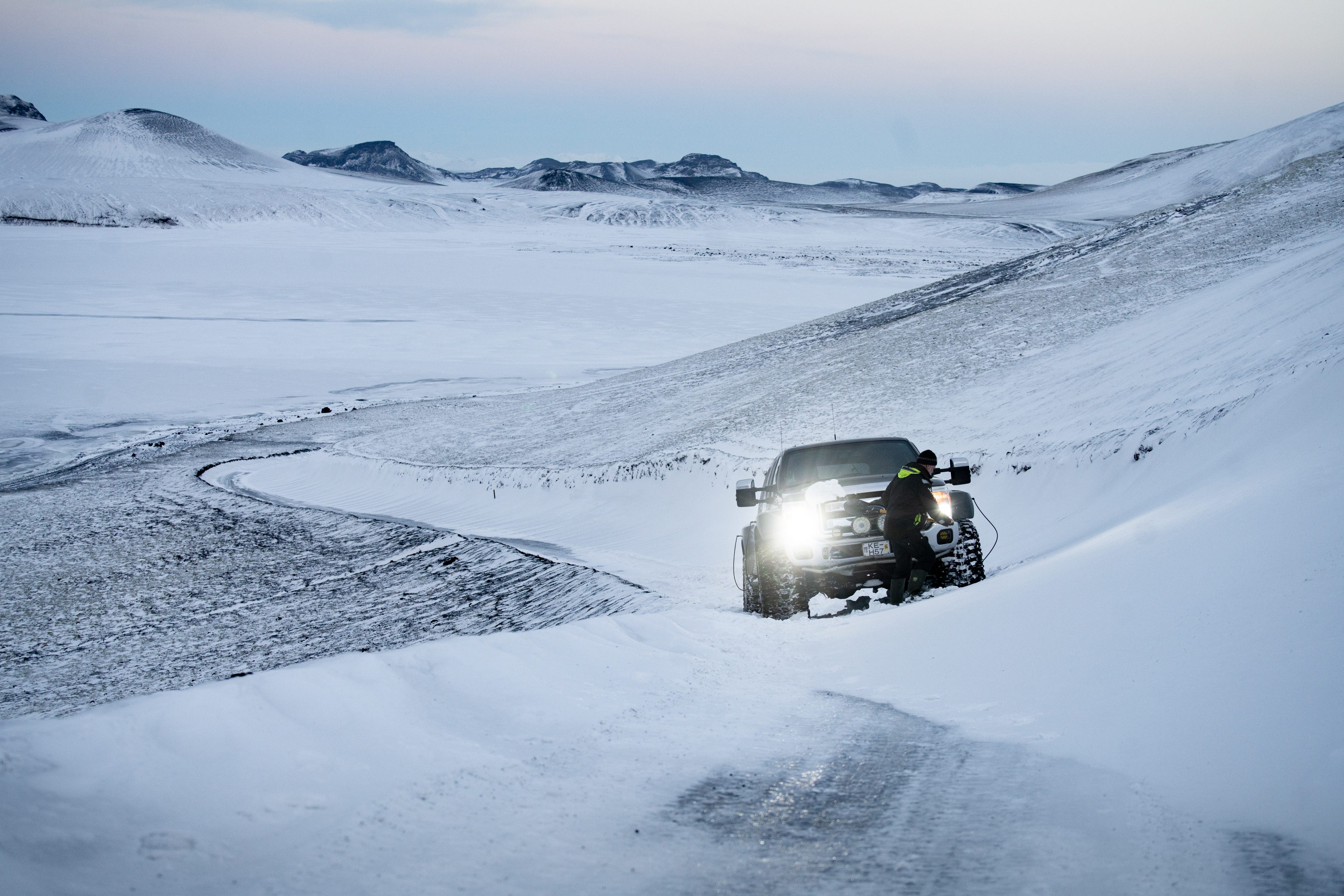
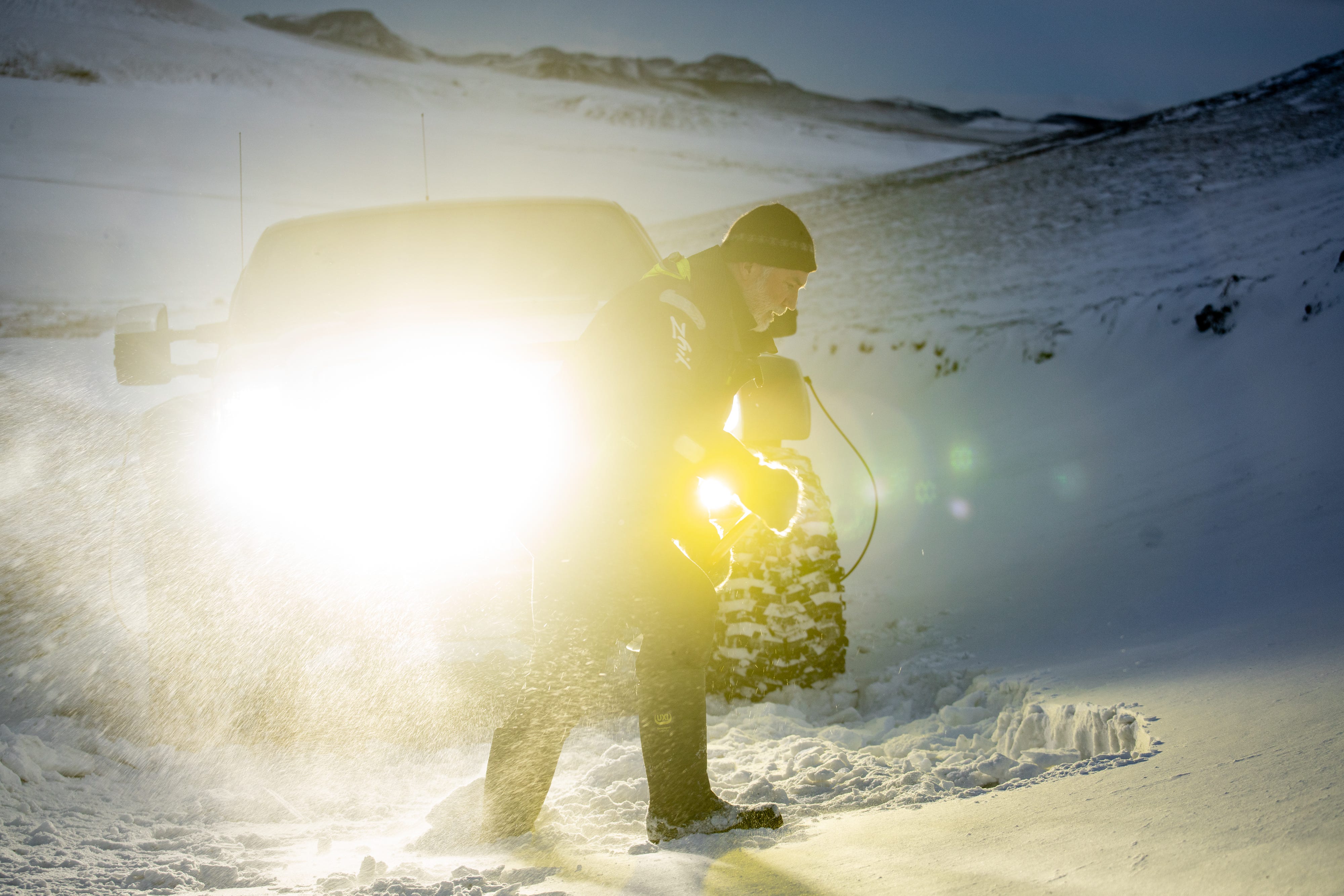
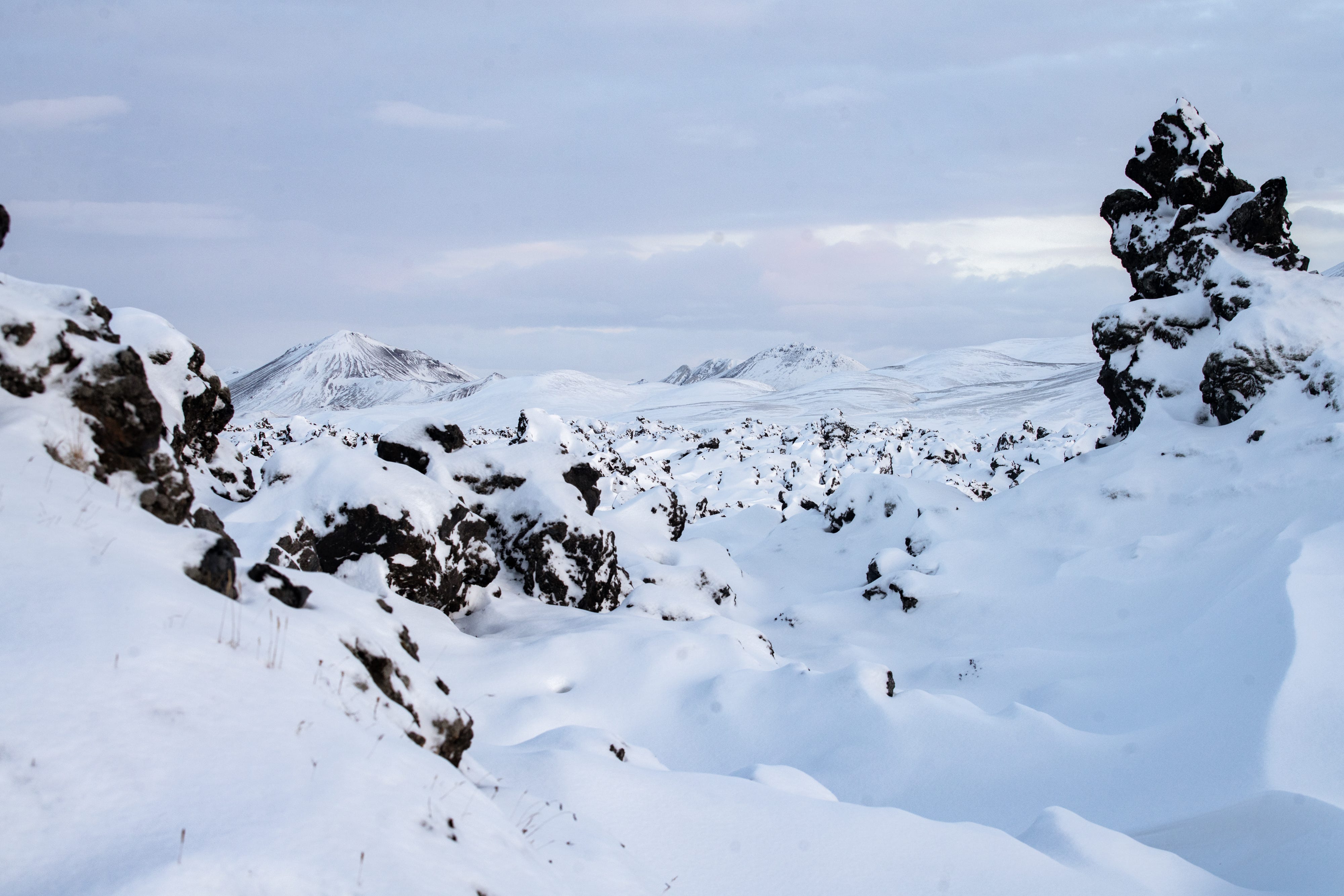
Eventually the truck was freed, and we continued hacking through the untouched snow for a few km’s before coming to another, even more impassable, drift. From here we had no choice but to proceed on foot. The walking was tough; my boots sunk into snow so deep it reached my knees. But how brilliant to see such a vast area of unbroken snow, marked only by light paw prints here and there; it looked like no one had been up here for months. We trudged through structures that looked like abstract statues watching over us; only later did I perceive that they were lava formations, nature’s sculptures. If I stopped for a moment, the silence was deafening, muted by white all around. My soul stirred.
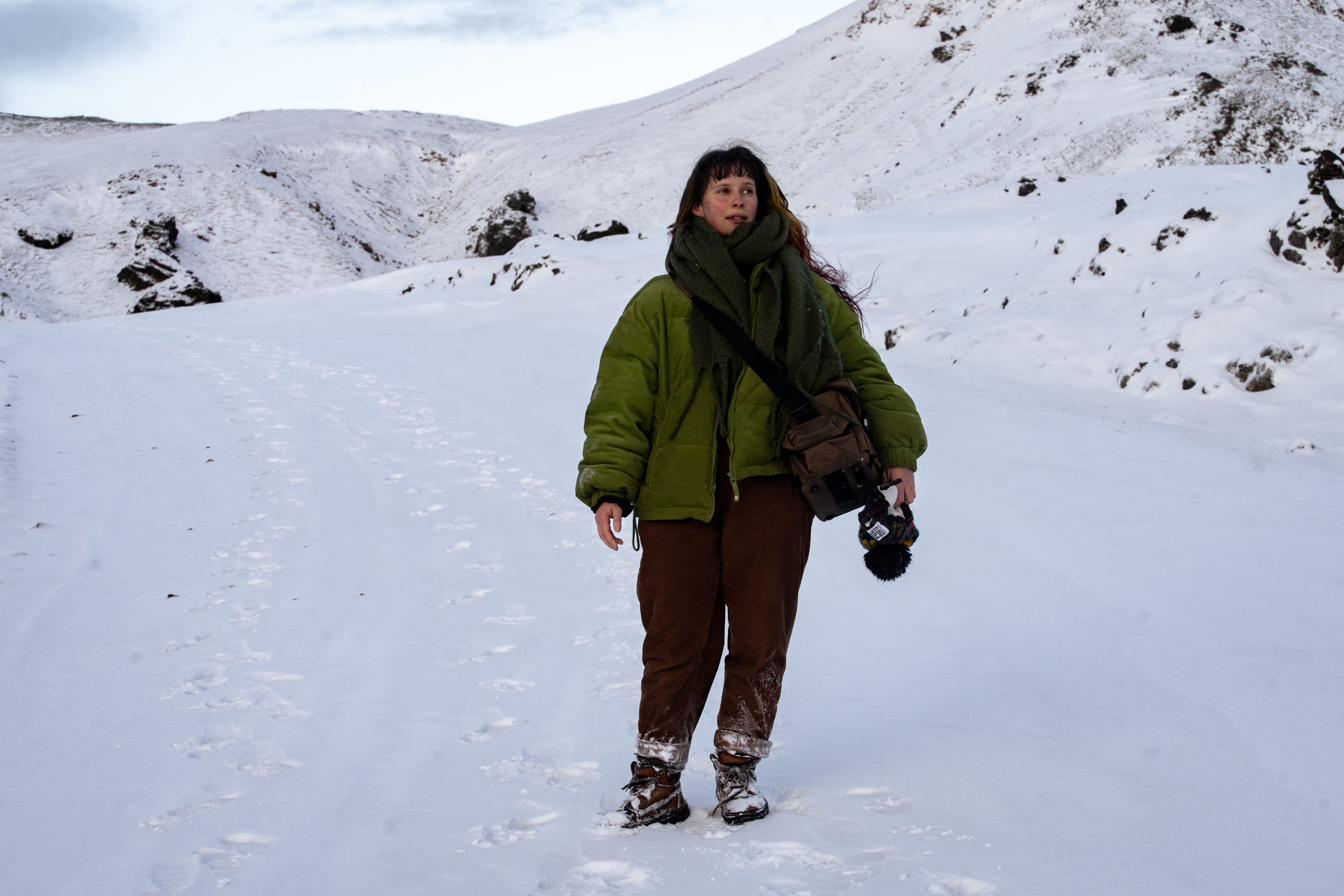
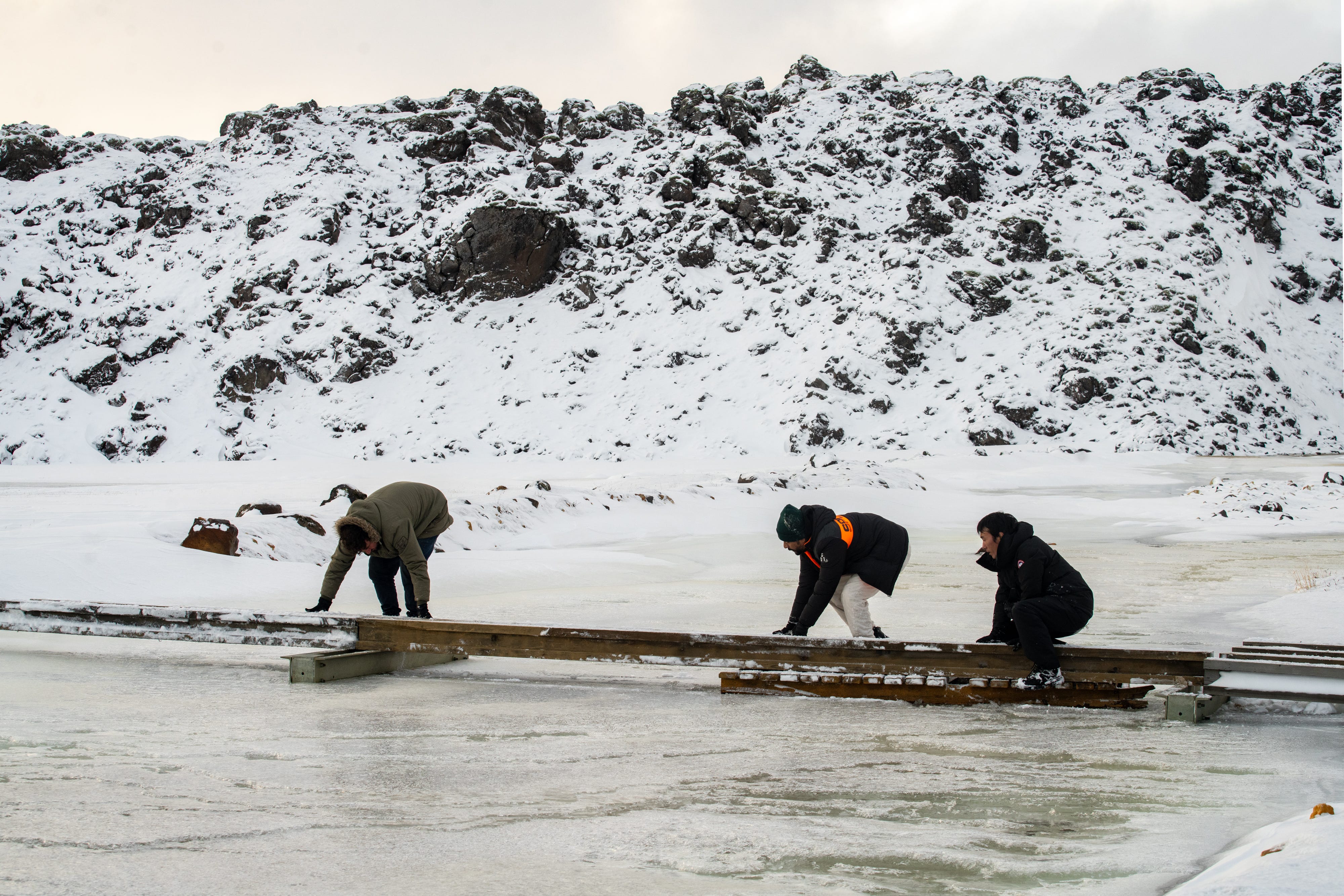
Following our guide’s instructions we reached the river and followed it upstream to the valley head, where one thing was conspicuously missing: a bridge. Two piers stood in the centre of the icy river, not quite frozen enough to walk on, and nearby stood a pile of wood.
“Well,” I said jokingly, “looks like we’ve got to build our own bridge!”
To my surprise three of the crew, Ben included, got to work, sliding wooden beams across the supports and using a palette to balance on. They managed to craft a bridge just wide and stable enough for us all to pass over, and finally, after 5 hours, we reached our prize: the Landmannalaugar hot spring.
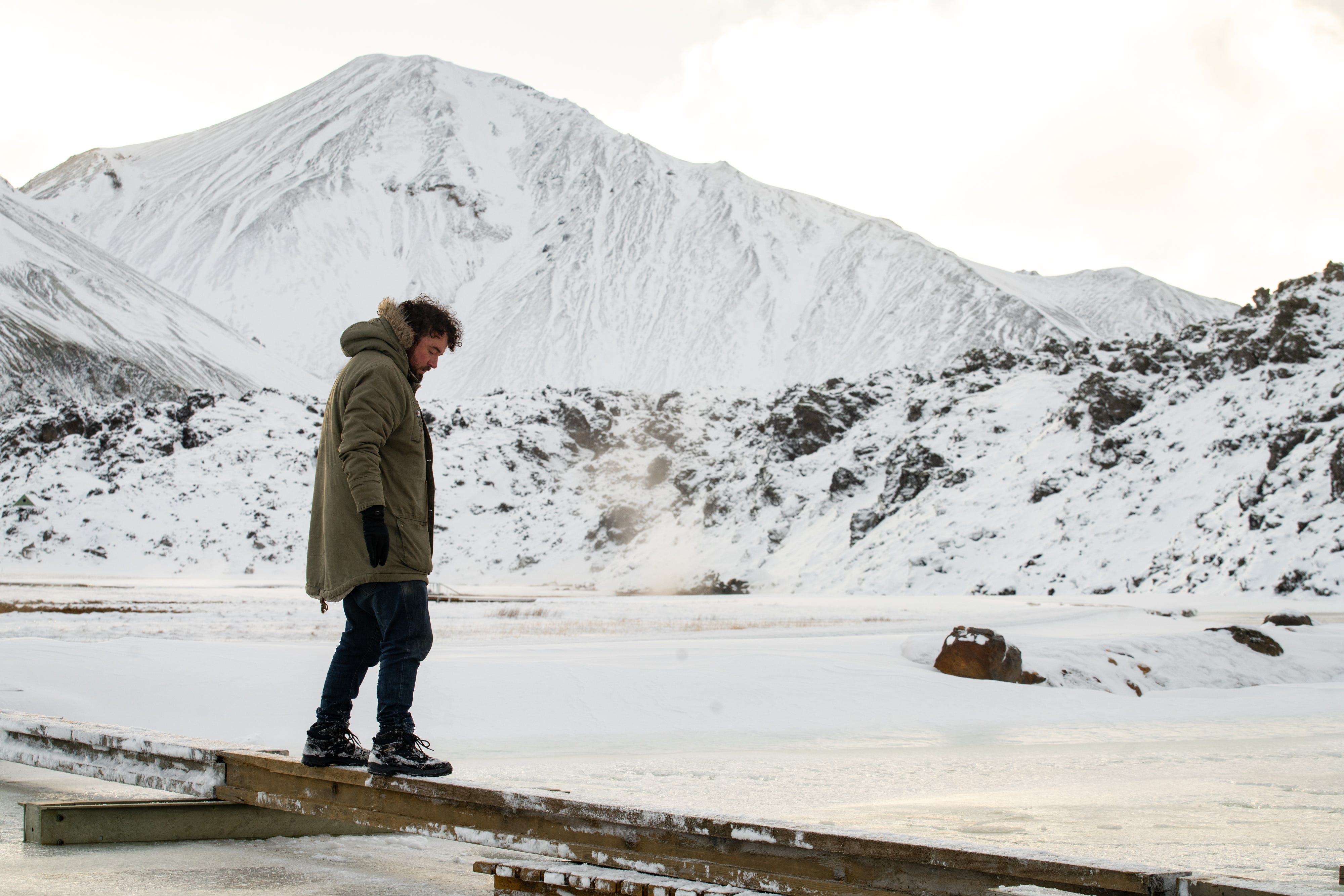
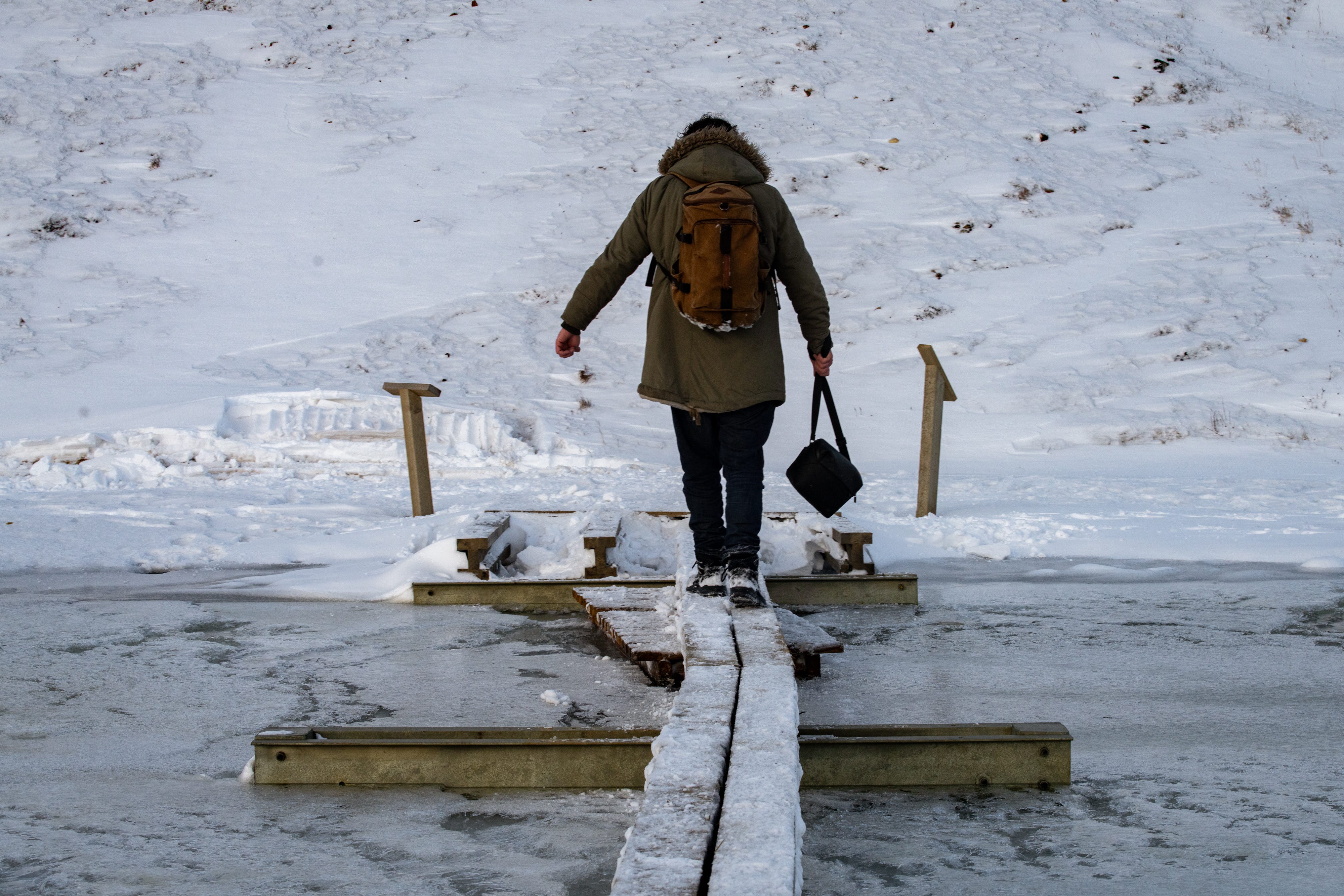
I can’t describe to you, as a thermophile, the feeling of pure joy at reaching a remote hot spring in the wilderness free of all other humans. Of seeing the iron-tinged steaming waterways cutting through the snow, the perfect trickle of a hot waterfall mingling with a cold river at the end of a wild journey. Pure, unadulterated excitement.
That is until we were halfway through our soak, and noticed a foul stench– a swan had rather inconveniently died in the spring, and we were bathing in the run-off of its remains.
Guess there was no such thing as perfect after all.
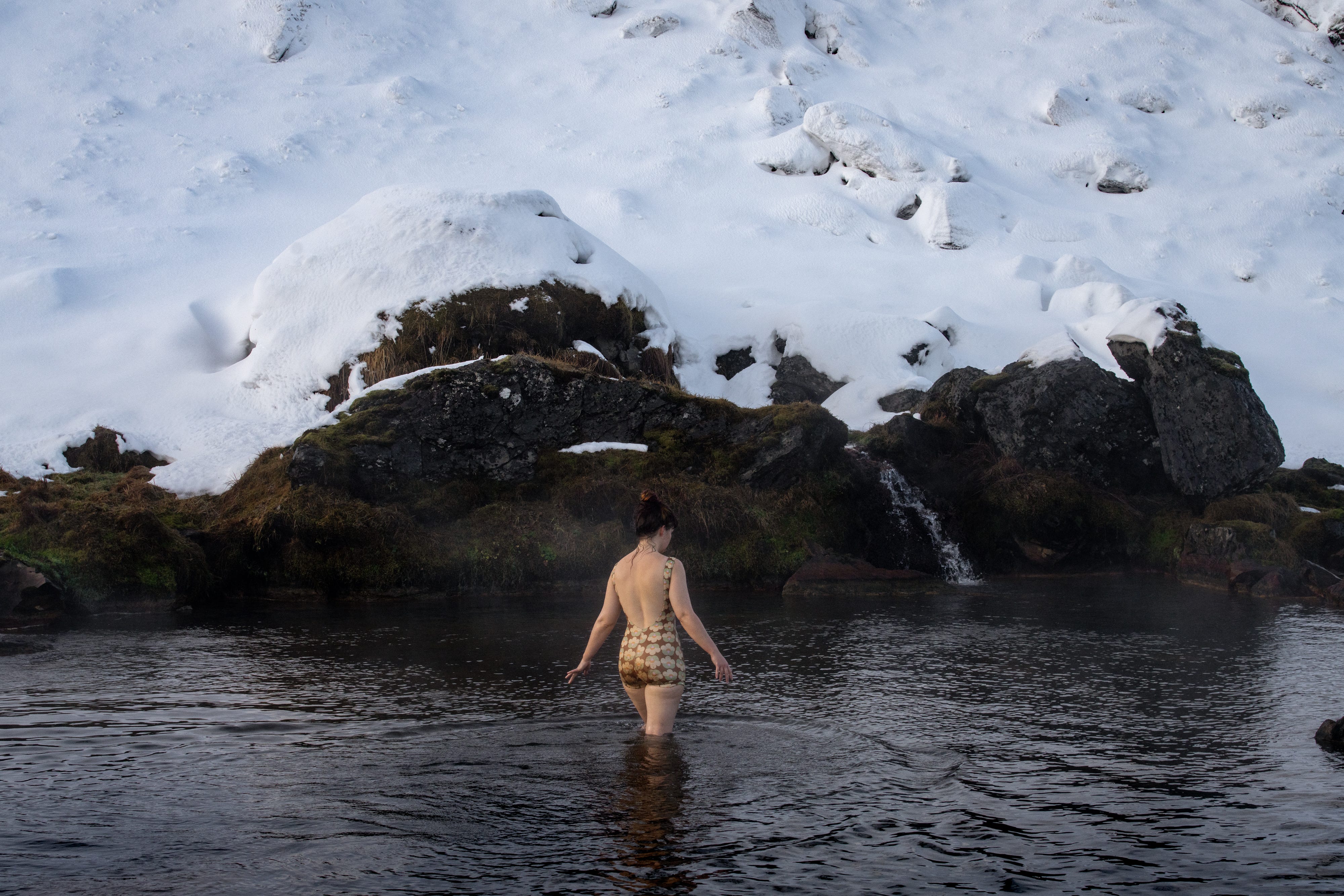
It didn’t matter. That week we wrapped up our 8 week long filming journey, said goodbye to the crew, and celebrated by– you guessed it– bathing in another hot spring. The elation was real; Ben and I started playing like little kids, me jumping on his back and hugging him in delight. We had done it. The most stressful, exhausting, exhilarating 8 weeks of our lives were over.
The Landmannalaugar expedition had been the icing on the cake. A reminder of what it is to feel alive, excited and invigorated. A reminder of our passion for the wilderness, and our need for a vehicle that could access it. Everything we knew already but that had faded in the year-long slump of dreams broken.
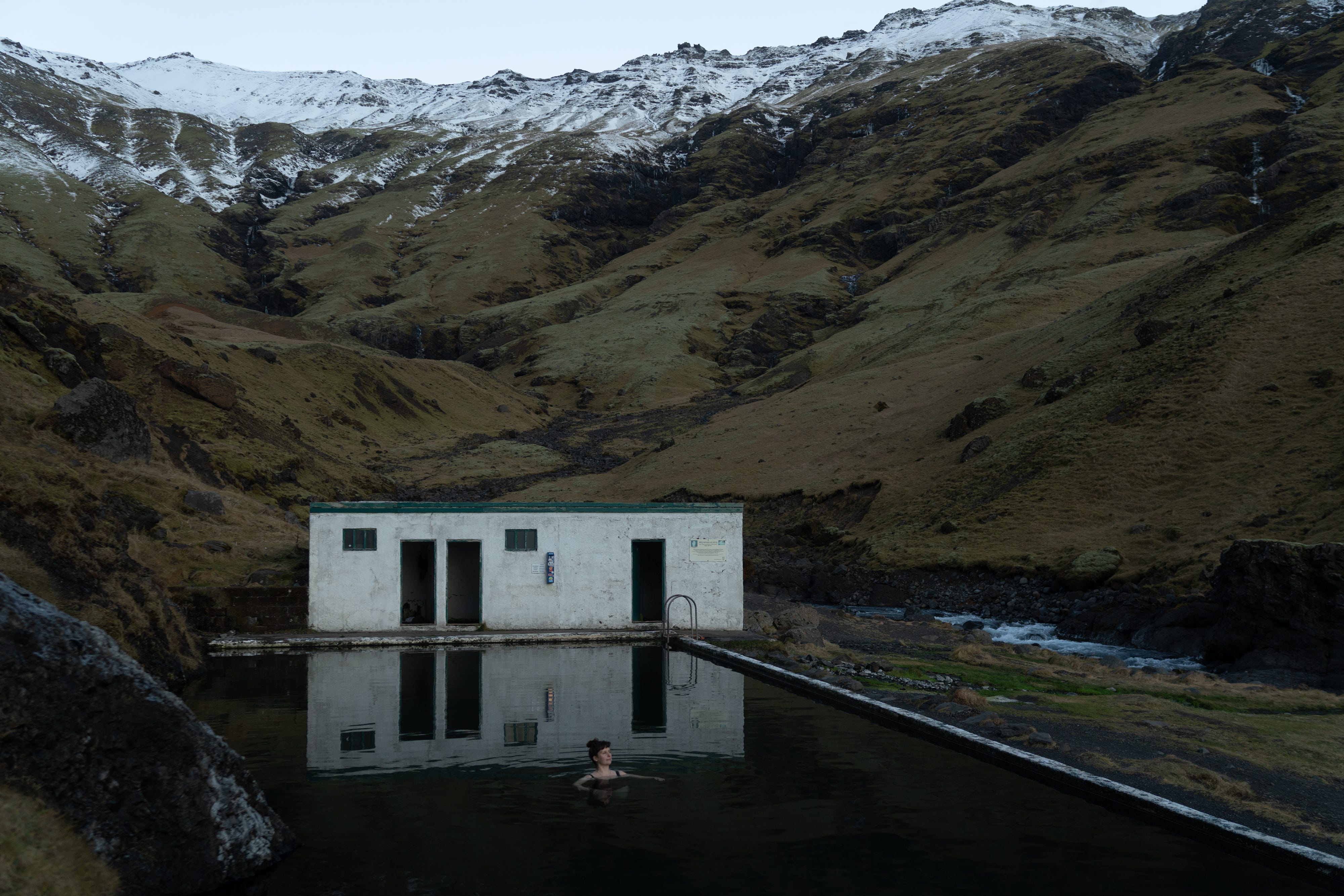
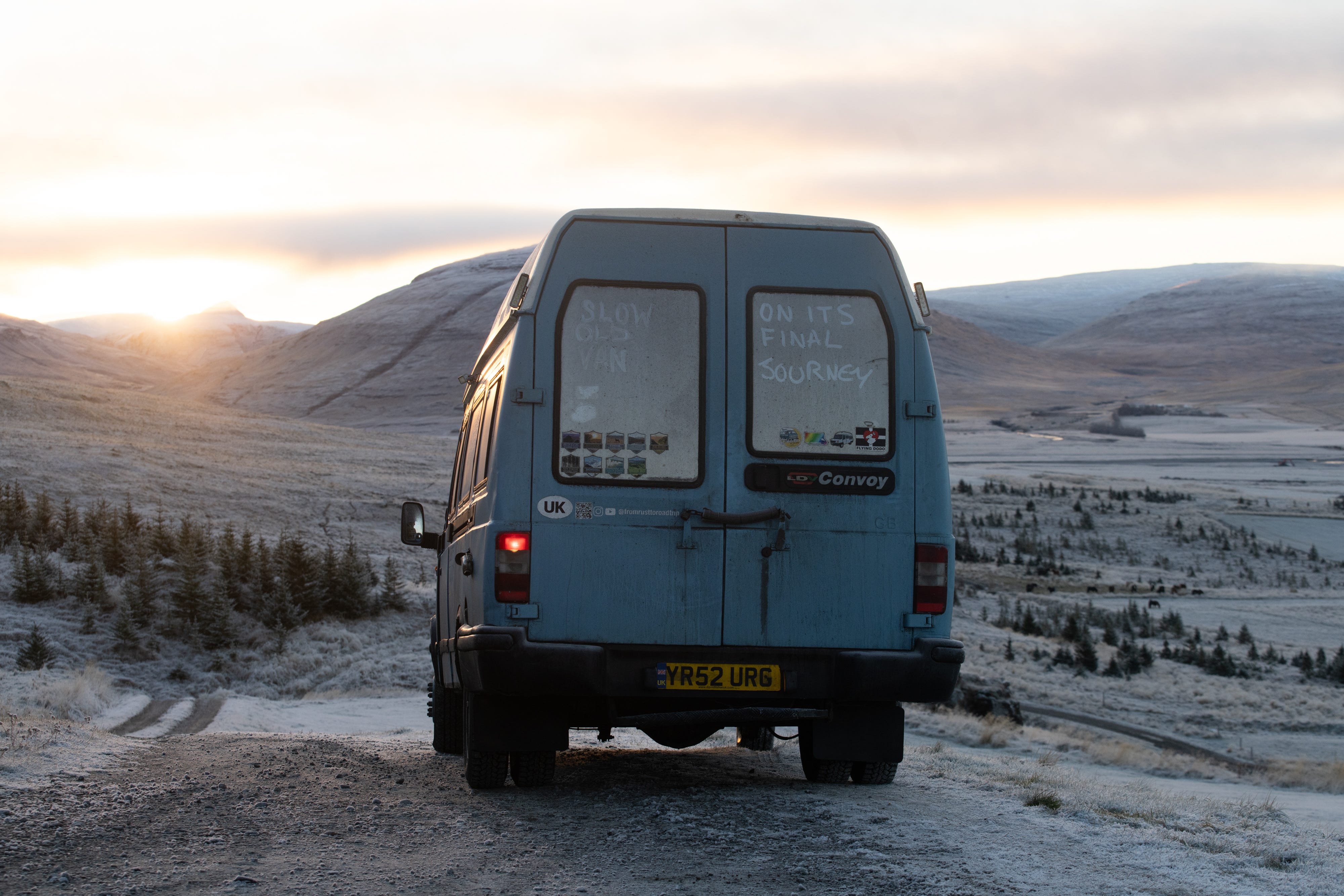
We spent a few more days in Iceland, being battered by the wind, bathing in sulphurous mud and crater pools, and I finally conquered my fear of driving on ice roads. But it was on a crisp night in Þingvellir National Park that a realisation dawned on myself and Ben: this would be our last night in our van. Ever.
It was long overdue for retirement; it’d been resurrected four consecutive times since being condemned 4 years ago. We’d travelled 34 countries, 150,000 miles together, but it was literally rusting away before my eyes. I felt at peace with this ending; I was finally ready to let it go, and Iceland felt like the perfect send-off, though tears still pricked at my eyes. The next day we loaded the van onto the cargo ship, to be picked up later in The Netherlands for her final journey home.
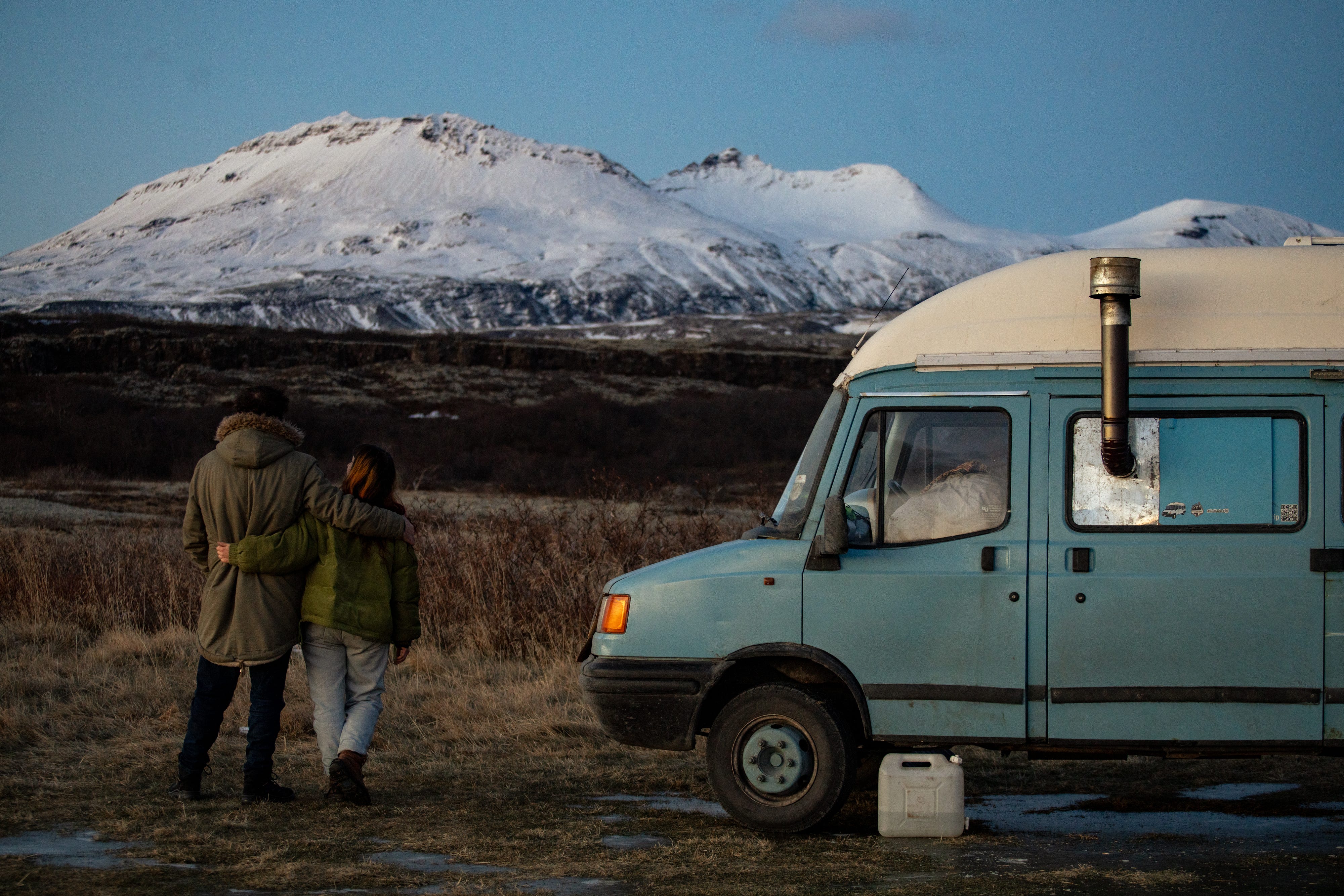
I felt calm as we left; complete. Iceland had given me space to come back to myself. To feel settled again, no longer spiralling. My sense of purpose was as clear as the glacial air. The flight back to mainland Europe was jarringly short compared to our 2 day drive and 3 day ferry sailing through choppy waters. I was given a glimpse into the ease with which most travellers visited the country, not touring its fringes in the brutal winter like we had done. But I wouldn’t have had it any other way. The sense of adventure was a tonic; the van struggles, the cold biting at my fingers and face, the ice roads and murderous wind. The elements had re-awakened something elemental within myself.
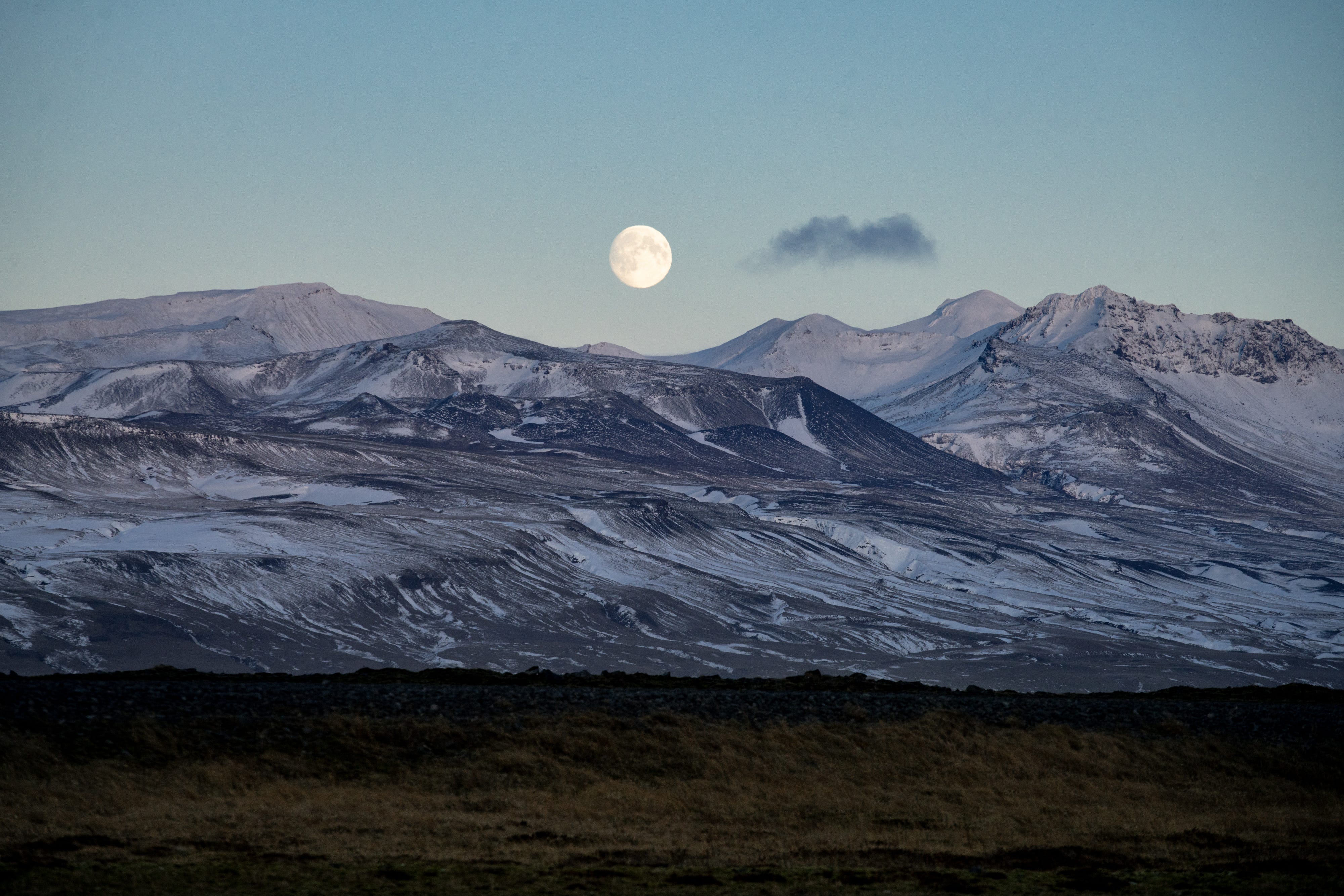
There’s many things I’ll miss about Iceland; the crackle of studded tyres on tarmac. The particular green of moss. The crumbly black rock landscape. The frozen stillness. The golden grasses. Perpetual golden hour. Even the long dark nights which came alive with the aurora or the stars or nothing at all.
On the final day, I became fascinated with Hraungambri, or Wooly-Fringe moss. A slow-growing plant that coats the sharp edges of lava rocks, softening their edges, presenting a pale shade of primordial green that’s almost indescribable in its soft and aged beauty. It grows just 1cm a year in the harshest of environments, and each blanket is as ancient as the volcano that allowed it to grow. Maybe one day I too would remain in one place long enough to grow my own mossy layer.
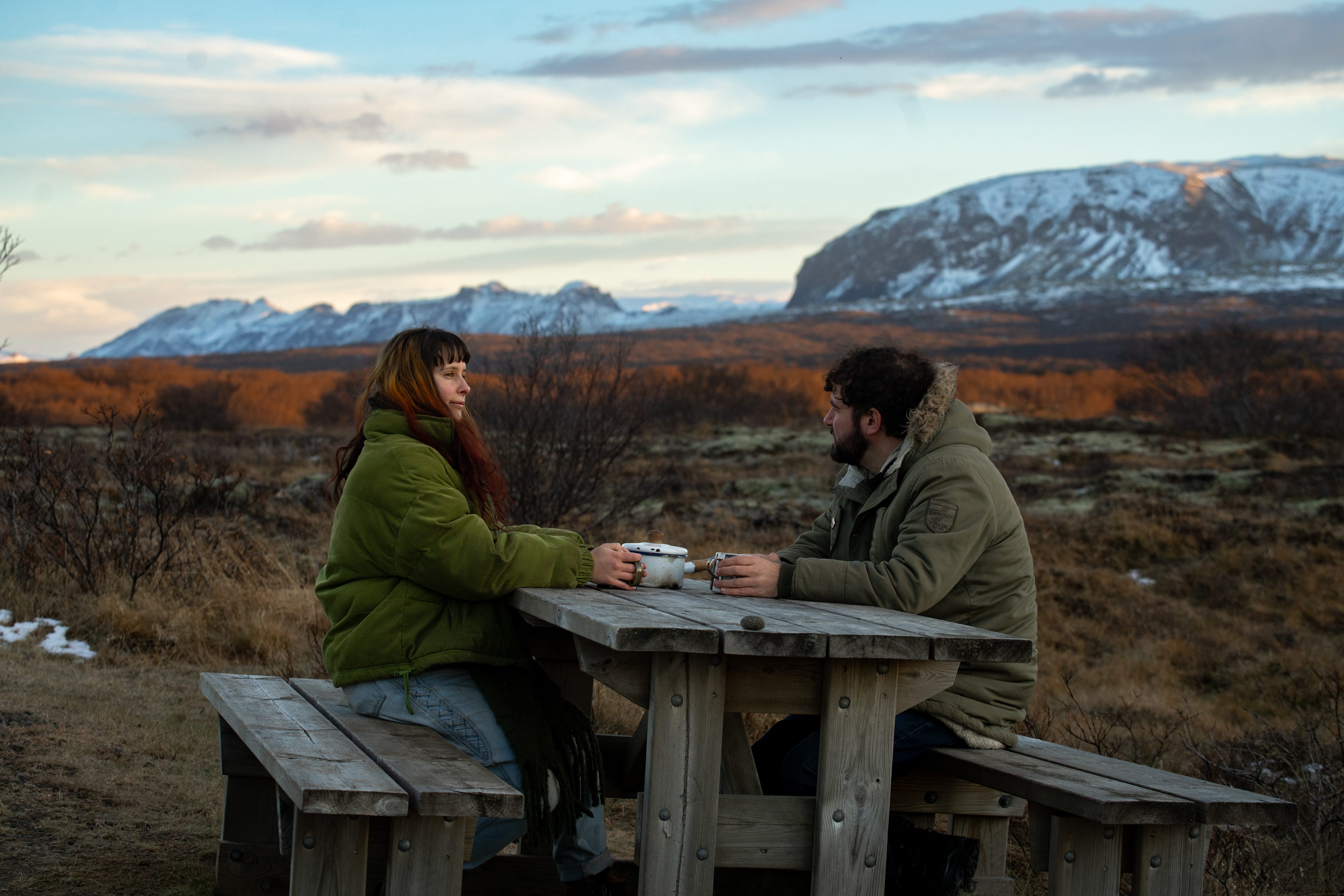
As we touched down in the grim greyness of Northern Europe, I found myself longing for the moss again; to brush it with my hands, walk through its soft boulder shapes; I felt it had been ripped out of my hands in crispy clumps right at the moment I began to develop my appreciation for it. But I consoled myself that I would only have to spend another few months here. That lands as wondrous and freeing as the land of Ice and Fire would once again soon be within my grasp.
Thanks for walking this last stretch with me. If something resonated— the fear, the quiet transformation, the longing to stay long enough to grow— feel free to leave a comment or share it with someone who might recognise themselves here. You can subscribe to keep following the road ahead, wherever it leads next.
–Lucy 💙
Beautiful Lucy, your writing is developing so fast! I loved this one. Very emotive but grounded xx